
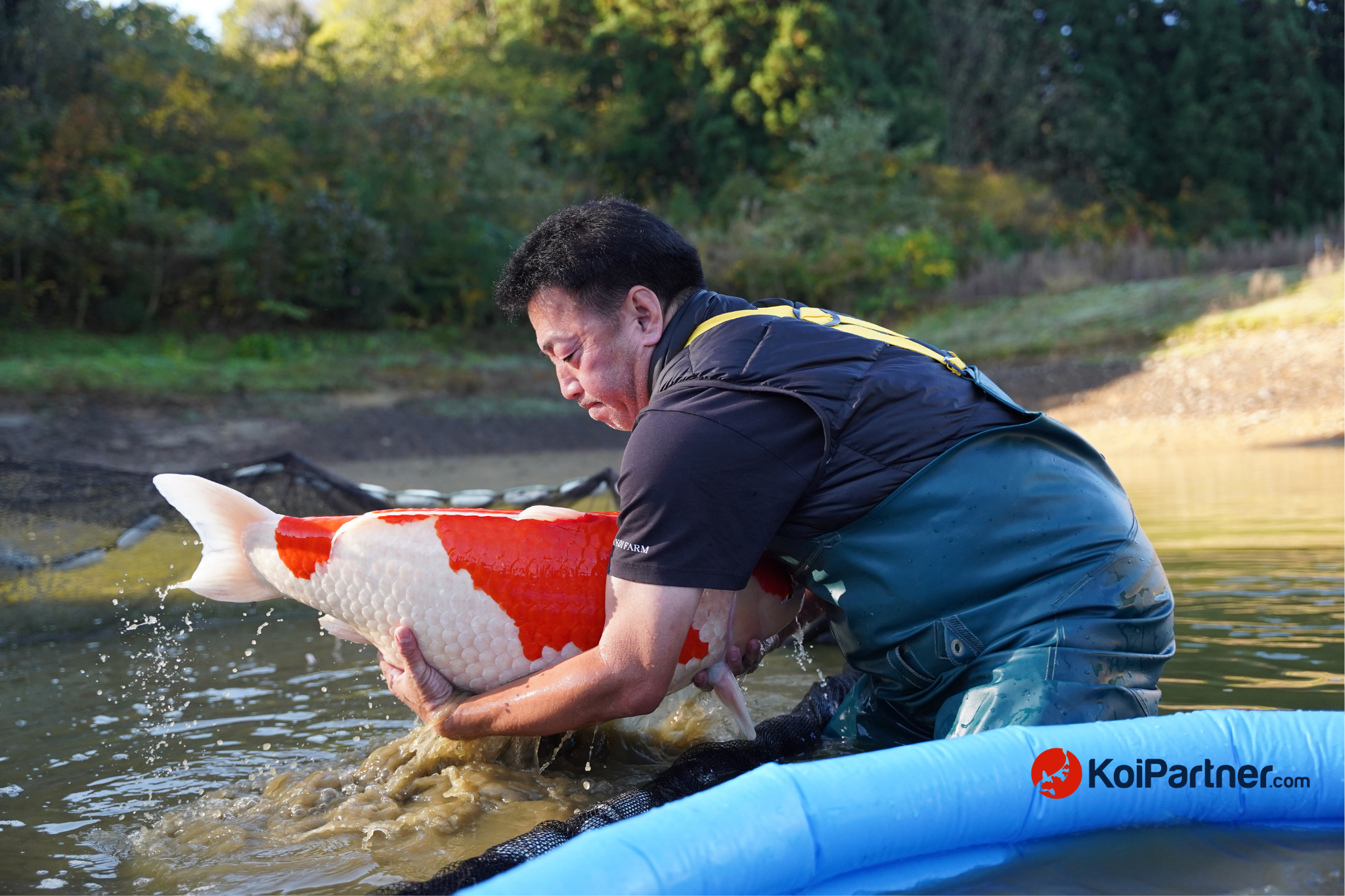
Every spring in the mountains of Niigata, Japan, a quiet but extraordinary ritual begins. In the shadow of snow-capped peaks, amidst neatly arranged rice paddies and cedar forests, generations of koi breeders rise before dawn. Their lives revolve around one singular pursuit: crafting the perfect koi.

As The Koi Partner, I’ve had the rare privilege of not just observing, but participating in the sacred process of koi breedign in Japan. Over the past few years, I’ve visited and filmed koi breeding at some of Japan’s most revered farms, including Shintaro Koi Farm and Isa Koi Farm. These experiences have profoundly changed how I understand koi—not merely as pets or fish, but as living, breathing art pieces born from decades of discipline and devotion.
In this article, I’ll take you behind the scenes of this incredible process, offering a close-up look at the labor, precision, heartbreak and triumph involved in creating a champion koi.
Tradition Rooted in the Mountains

The Niigata region—and more precisely, the city of Ojiya—is the birthplace of Nishikigoi, what the world now simply calls “koi.” The word Nishikigoi literally means “swimming jewels,” a fitting name for creatures that shimmer like art in the water.
This part of Japan is not only blessed with clean mountain spring water, but also with centuries of koi-breeding knowledge passed down through generations. Breeding koi here isn’t just a business—it’s a lifestyle, a philosophy and a craft on par with ceramics, sword-making or calligraphy.
Shintaro and Isa Koi Farms are two prime examples of this heritage. Both farms have decades of experience and an unwavering commitment to quality over quantity. The breeders don’t chase trends, rather they aim to produce koi that will still be admired a decade from now.
Koi Breeding in Japan Begins in the Spring

Koi breeding typically begins in late April or early May, depending on weather conditions. By this time, the breeders have already selected their parent koi, known as oyagoi. These aren’t just any mature koi—each oyagoi represents the best bloodlines, body shape, skin quality and color development the breeder has cultivated over many years.
Watching the breeding process at Isa Koi Farm was both mesmerizing and humbling. I saw master breeder Mitsunori Isa gently lift a massive female Showa, nearly 85 centimeters long, from her holding pond. He calculated every movement. Despite her size, she was handled with absolute care. Next came the males—slimmer, but full of energy. They were introduced into the spawning process in the evening, and by early morning, the magic had begun.
What looks serene on the surface is anything but. Spawning is an explosive, chaotic event. The water churns as the males chase the female, nudging her to release eggs—hundreds of thousands of them—which they then try to fertilize. Breeders must monitor the process constantly to ensure the koi don’t injure themselves.
Timing is critical. To protect the koi, breeders often manually remove the eggs and sperm to fertilize them in a separate pond. This method ensures the safest outcome and minimizes stress for the fish.
The First Culling: Where Dreams Are Cut Short

to spawn her eggs.
About three days after spawning, the fertilized eggs hatch into fry. They are just a few millimeters long—almost translucent and far from the colorful koi we recognize.
Roughly two weeks later, the first culling begins.
This is the part most outsiders can’t fully grasp. Out of the hundreds of thousands of fry, fewer than 0.5% to 1% will be kept. The rest are removed based on deformities, poor coloration or other undesirable traits. It’s a harsh process, but a necessary one—just as in nature, where only the strongest carp survive. You can’t produce world-class koi without making tough choices, and that’s why breeders try to sell most of their unselected fish domestically or to dealers worldwide.
At Isa Koi Farm, I watched Mr. Isa and his team cull fry using nothing more than blue bowls and handheld nets. They moved with incredible speed, yet each decision rooted in years of experience. A tiny pattern or the hint of future color development could mean the difference between a fish being kept or culled.
I asked Mr. Isa how he makes these decisions. He simply said, “You have to see the koi not for what it is, but for what it could be.”
That’s the heart of koi breeding— vision. Breeders don’t just see today’s fish—they see what that fish might look like five years down the road, and whether it has the potential to become a champion.
Seasons of Growth and Challenge
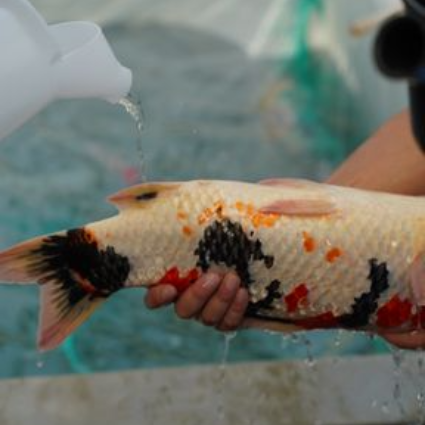
After culling, the selected fry are moved into carefully managed mud ponds—shallow, earthen pools rich in minerals and natural food sources. This is where the koi begin their first true stage of growth.
From May to October, breeders work almost nonstop. They monitor the mud ponds daily, checking water quality, adjusting feeding schedules and observing the development of their young koi. Any change in temperature, water pH or oxygen level can hinder growth or ruin skin quality.
Shintaro’s mud ponds are legendary for the skin luster they help produce. The minerals in the soil contribute to a deep, rich beni (red pigment) and bright, snow-white shiroji. But this comes at a cost—harvesting koi from these ponds in autumn is a monumental task.
I filmed the ikeage (harvest) at Shintaro last October. It began at sunrise, with a team of workers in waders slowly herding the koi to one end of the pond with nets. Together with my U.S. partner, Fitz’s Fish Ponds, we helped the breeder during this process. The breeders watched with bated breath as the koi were lifted out, one by one, revealing how each fish had developed over the summer.
Some had grown dramatically. Others had deepened in color. A few developed perfect patterns. This is when breeders face a hard truth: even with the best bloodlines and ideal conditions, koi breeding is still a gamble.
Breeding Koi is an Art and a Gamble
If you think about it, breeding koi is unlike any other livestock or pet operation in the world. Imagine a painter beginning a masterpiece by splattering a thousand tiny drops of paint onto a canvas—and only keeping the two that landed just right. That’s koi breeding.
Each generation of koi is a high-stakes art project. Breeders often invest 10 to 15 years into developing a single bloodline. They experiment with pairings, tweak growing conditions and make difficult, future-altering decisions at every stage. The odds of producing a koi that wins at Japan’s prestigious All Japan Koi Show? Maybe 1 in a million.
And yet, they keep going.
Why? Because for Japanese breeders, it’s not about money or recognition. It’s about perfection. It’s about continuing a tradition that stretches back centuries. It’s about the dream of producing a living jewel—something that carries the soul of its maker and stirs the heart of everyone who sees it.
What I’ve Learned in 10 Years

Being The Koi Partner has given me rare access to this secretive world. I’ve captured hours of footage, documented stunning koi transformations and witnessed both joy and heartbreak behind the scenes. But more than anything, I’ve come away with a deep respect for the breeders.
They are not just farmers. They are artists. Scientists. Philosophers. And above all, craftsmen.
There is a quiet dignity in how they work. You won’t find flashy websites or big marketing campaigns. Most breeders prefer to let their koi speak for themselves. And when you see a truly great koi—a Kohaku with perfect symmetry, or a Showa with jet-black sumi balanced by fiery beni—you understand why.
That fish is not an accident. It’s the result of thousands of decisions, hundreds of early mornings and countless moments of doubt.
As koi enthusiasts, hobbyists or dealers, it’s easy to admire the beauty of a finished koi. But understanding where that koi came from—and what it took to breed, raise and refine it—adds a whole new level of appreciation.
So, the next time you see a koi swimming gracefully in a dealer’s tank or at a koi show, take a moment to think about its journey. Think about the mud pond in Niigata it came from. Think about the breeder who culled thousands just to keep that one. Think about the craftsmanship behind every scale, every curve, every pattern.
Koi may be fish. But in the hands of Japanese breeders, they become something much more.
They become living works of art.

Good morning
Like to be part of your elite mail group . Being koi fish enthusiastic , always explore all possible source .
Pls include me in ur mailing group 🙏🙏
Thanks for your interest. You can apply for a hobbiest subscription through the following form on our website.
https://www.pondtrademag.com/subscriptions-for-hobbyists/