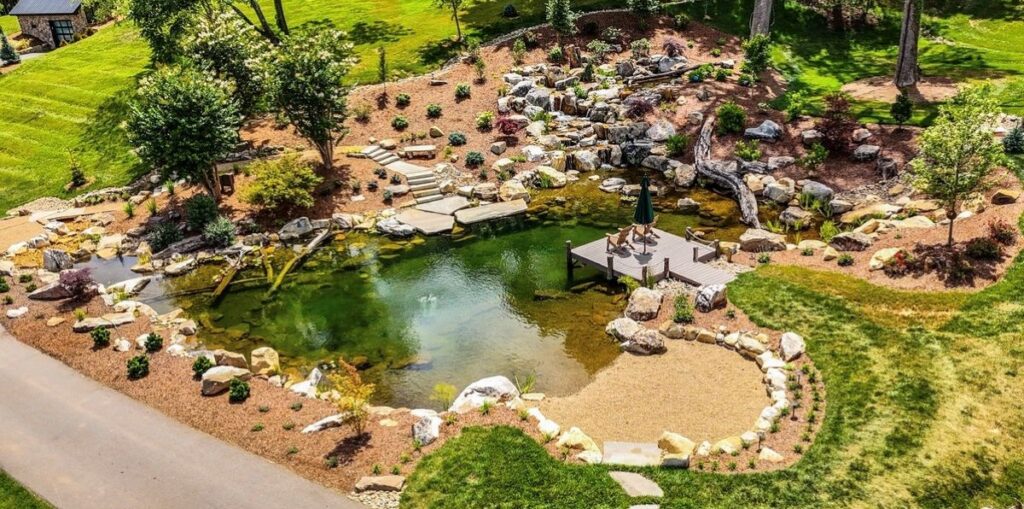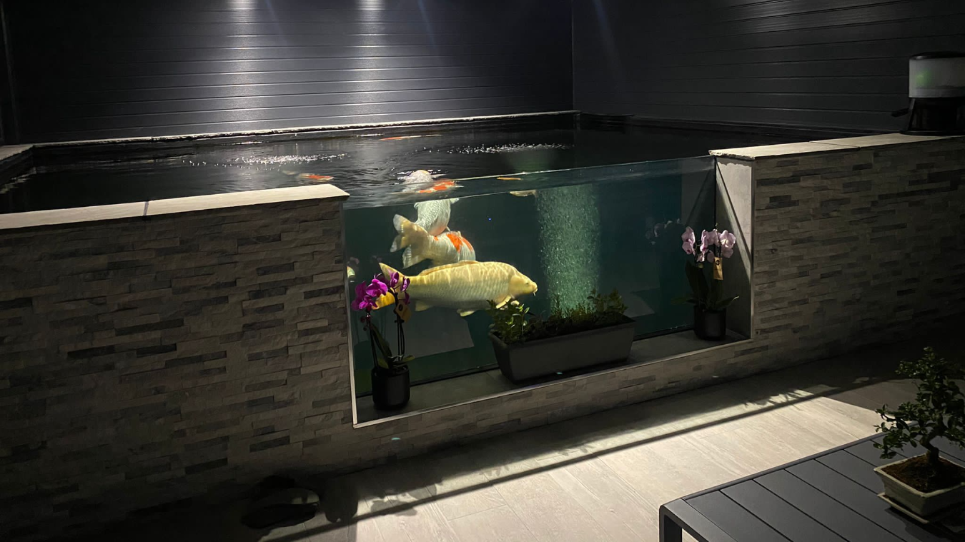
When I first began traveling to the United States more often, around 10 years ago, I had no clue how big, bold and busy the American pond and koi world really was. Over the years I’ve visited many pond builders, dealers and hobbyists across the US, including multiple trips with Brian Fitzsimmons and his team from Fitz’s Fish Ponds in both America and Japan. Those travels opened my eyes to just how differently the hobby operates across the Atlantic.
I’ve been visiting America for 30 years now and have attended most of the major shows during that time. I’ve learned a lot from the people I’ve met — and even more from the way they build, maintain and enjoy their ponds.
Garden Culture and Outdoor Living

It’s hard to explain the U.S. versus U.K. difference without experiencing it. One of the biggest luxuries Americans have is simple: space. Garden (or “yard”) space can be enormous compared to ours. And the weather allows them to actually use it.
In the U.K., with our legendary rain and gloom, most people get maybe a couple of decent months outdoors. Meanwhile, I’ve been to clients’ homes in America where they grill breakfast, lunch and dinner outside every single day. When you live like that, having a beautiful garden becomes a priority because you can enjoy it nearly year-round.
I’ve been told more than once, “You’re going to see the most amazing ponds you’ve ever seen.” Then I pull up to the front of the property and think, This house? Really?
But then I walk around the back and it’s paradise — huge ponds, lush landscaping, waterfalls, plants thriving everywhere. You can feel the love poured into it.
Space and Access Challenges in the U.K.
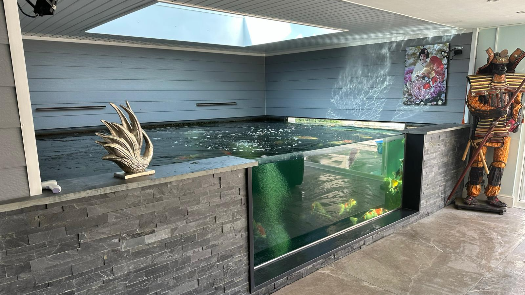
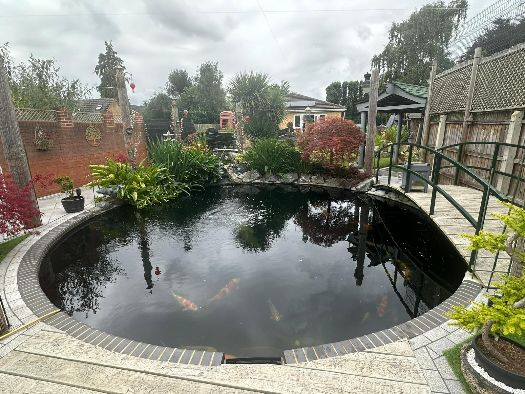
Back home, everything feels tighter. Many of the new koi ponds in the U.K. are built in modern housing estates where the houses are close together, and access down the side of the property might be just 24 inches wide. Trying to get a machine into the garden is nearly impossible.
Of course we have ponds where machinery access is fine, but more often than not, it means hand-digging. Soil goes out front in barrows. Skilled builders spend days moving soil before construction even starts.
That labor alone drives up cost — which is why many people dig the pond themselves to save money. It makes a massive difference.
Natural Ponds vs. Purpose-Built Koi Ponds

In America, many people build what we’d call Aquascape-style ponds — natural, rock-filled, loads of water movement, waterfalls splashing away. The old argument between the U.K. and U.S. about rocks in ponds will probably never end.
I’ve never personally had an issue with rocks. Carp love rooting around the bottom. It’s natural. And 90% of these ponds run on grid systems, which people in the U.K. would compare to undergravel filtration.
But high-end Japanese koi? Completely different story. Koi don’t need an excuse to injure themselves — they’re quite talented at it. People who want to grow show koi and bring out full potential focus on exact flow rates, massive filtration, specialized food and very controlled water treatments. These are two completely different goals.
Some people want a natural pond and a peaceful garden. Others want a koi growth system. Both are valid — and both require different things.
What People Buy — and Why

In the U.K., probably only about 10% of koi keepers have Japanese koi. The rest keep domestic or imported non-Japanese fish. With our space restrictions, many start with small ponds for just a few fish. But then the koi bug sets in and they’re calling us about big dedicated koi ponds with high-quality Japanese koi. We see it all the time.
In the U.S., I see something very different. When Americans build a new pond, many want a full collection instantly: Kohaku, Showa, Sanke, Yamabuki, Chagoi, Ochiba — all in one go. Watching U.S. teams buy koi in Japan is fascinating. They’re often buying for one client but selecting many varieties.
In the U.K., top koi keepers usually buy one or two fish a year, maybe three. It’s a slower, more curated journey.
Maintenance: The Biggest Difference of All
I always knew Americans had a different approach to maintenance, but it wasn’t until I spent time with Fitz’s Fish Ponds — that I realized how much maintenance contributes to the overall design of their business and many other pond businesses in the industry as well.
At the start of the season, crews go out to open ponds, clean them, check equipment, replace pumps and tidy everything up after winter. At the end of the season, they close everything down again. And during the year, they handle every issue from leaks to electrical failures.
In the U.K., this model exists but on a much smaller scale. Maintenance is growing, but slowly. We do not have companies sending out 10 trucks every morning to service thousands of clients within a two-hour radius. That level of organization and volume is something I still find incredible to witness.
I’ve stayed at big U.S. pond facilities before. I love waking up early, grabbing a coffee, wandering around the fish houses in total silence. Then around 6:30 a.m. the rumbling starts — trucks rolling in, crews arriving, equipment loading. Thirty minutes later, they’ve all blasted out again. Organized chaos. Then at 4:30 p.m., the whole process runs in reverse.
Nothing like that exists in the U.K. koi world. Not even close.
Koi Shows Across the Atlantic

The koi show scene in the United States is still thriving. In summer, there’s practically one every weekend somewhere. But the size of the country makes it a logistical nightmare. I’ve helped pack koi for American clients who drive 20 hours to compete. Some even fly their koi to shows. It still blows my mind.
In the U.K., many shows have closed down. The ones we have are still great events, but it’s nothing like the frequency or scale in the U.S.
One Hobby, Many Lifestyles

This is what makes the koi hobby so diverse. You can have a stunning natural pond where someone enjoys the sound of flowing water after work. You can have someone else driving across states or loading koi onto a plane for a show.
Koi can be enjoyed by anyone, at any budget, anywhere in the world. The passion is the same — the lifestyle around it is what changes.
Sometimes the hobby just works a little differently and that’s what makes it so fascinating.
About the Author
Tim Waddington is a globally respected koi professional with more than 30 years of experience in sourcing, selecting, and showcasing high-quality Japanese Nishikigoi. He is the owner of Quality Nishikigoi in the UK, where he personally selects koi directly from Japan’s top breeders. Having traveled to Japan more than 110 times,