SPONSORED CONTENT
If you’re planning on building a backyard pond or adding a waterfall feature, one question always surfaces very early: What’s the actual difference between a pond pump and a waterfall pump? Let’s compare a pond pump vs. waterfall pump.
It might sound like a small thing, but choosing the wrong type of pump is one of the most frequent mistakes I see people make when setting up their first water feature. A mismatch can lead to weak water flow, noisy operation, poor filtration or even premature pump failure.
Whether you want a gentle fountain bubbling in a small pond or a bold waterfall spilling cleanly over a spillway, understanding how different water pumps work — and what each is designed to do — makes the entire build easier, cheaper and more reliable. This guide breaks it down in a practical way based on both real-world installation experience and design principles behind POPOSOAP’s pond, fountain and waterfall products.
Why Understanding the Pump Types Matters
Many beginners think “a water pump is a water pump.” But pumps are designed to achieve specific objectives. Some are engineered to move water with constant pressure. Others are built to circulate water. Some can raise water much higher, which becomes important if you’re designing a waterfall.
If you’re comparing the difference between a pond pump and a waterfall pump, the most important thing to remember is this:
- Pond pumps are designed to circulate water continuously and filter it.
- Waterfall pumps are designed for stronger flow and higher lift.
Choosing the right one means:
- Proper water circulation
- A cleaner pond
- A stronger or gentler waterfall effect
- Longer pump life
Ignoring this typically leads to frustration — either because the waterfall looks weak or because the pond water is cloudy.
The Key Differences Between Pond Pumps and Waterfall Pumps
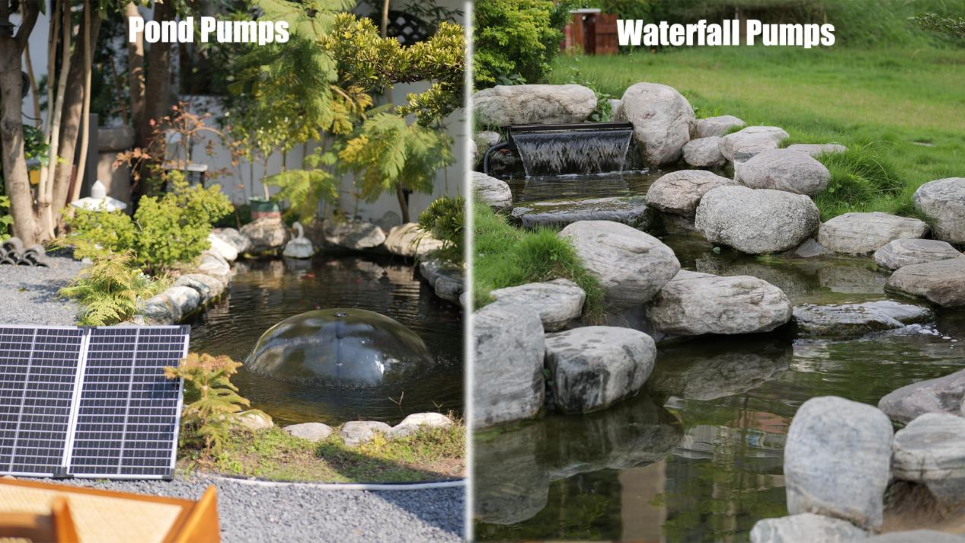
1. Water Flow vs. Water Pressure
A pond pump focuses on circulation. It moves a lot of water at moderate pressure, which is ideal for filtration systems and oxygenation.
A waterfall pump is all about lifting power. It is designed to push water upward with more force and consistency, especially if the spillway or waterfall sits above pond level.
Think of it this way:
- Pond pump = marathon runner
- Waterfall pump = power sprinter
Both technologies involve moving water, but in very different ways.
2. Designed Purpose
POPOSOAP designs its pond pumps, including solar options, with filtration-friendly designs and steady, low-watt motors that keep ponds oxygenated throughout the day without wasting power.
These pumps are paired with POPOSOAP waterfall kits that require stronger, more directed flow, especially when powering spillways 8 inches, 12 inches or wider.
3. Head Height Requirements
Waterfall pumps are designed around head height, or the vertical distance water must travel. This is where most circulation pumps fall short.
4. Flow Consistency
A waterfall requires a continuous, uninterrupted sheet of water.
A pond pump only needs to move enough water to keep the pond oxygenated and filtered.
How to Choose Between a Pond Pump and a Waterfall Pump
If you’re not sure which one you need, here’s the easiest way to determine it:
Choose a Pond Pump If …
- Your goal is clean, oxygenated pond water
- You’re running a filter, UV clarifier or biological filtration system
- You want a fountain spray rather than a full waterfall
- Your water return is close to pond level
POPOSOAP solar pond pumps and filter-friendly pump designs are built specifically for these setups, providing steady circulation with low wattage.
Choose a Waterfall Pump If …
- You want a stronger sheet of water over a spillway
- Your waterfall is above the level of your pond
- You need high GPH with sufficient pressure
- You have a wide waterfall (8–24 inches or more)
POPOSOAP’s waterfall kits pair pumps and spillways to avoid mismatched performance, something I see often with generic pump purchases.
When You Need Both
In many ponds, people use:
- A pond pump for filtration
- A waterfall pump for the waterfall feature
This ensures both systems run effectively without overworking either pump.
Fountain Pond Pump vs. Waterfall Pump
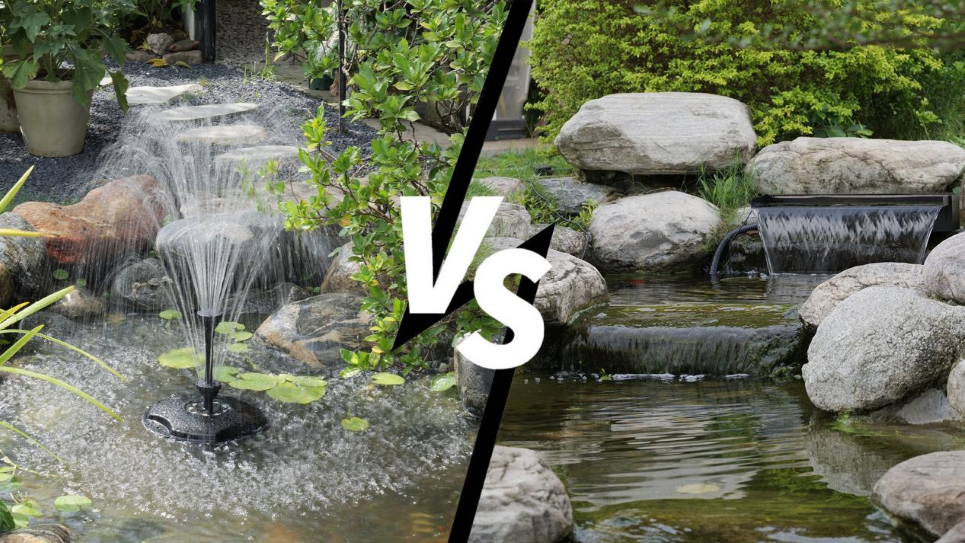
Another common point of confusion is the difference between a fountain pond pump and a waterfall pump.
A fountain pond pump is designed to push water upward in a decorative spray pattern. Fountain pumps at POPOSOAP come with multiple nozzles and are sized for clear, elegant spray shapes, even in small ponds or birdbaths.
These pumps are not intended to drive spillways. A spray nozzle requires vertical push; a waterfall requires horizontal force and head pressure.
The easiest way to think about it:
- Fountain pump = vertical water display
- Waterfall pump = horizontal sheet of water with smooth flow
Using a fountain pump for a waterfall often results in a thin, uneven trickle.
Maintenance and Lifespan Tips
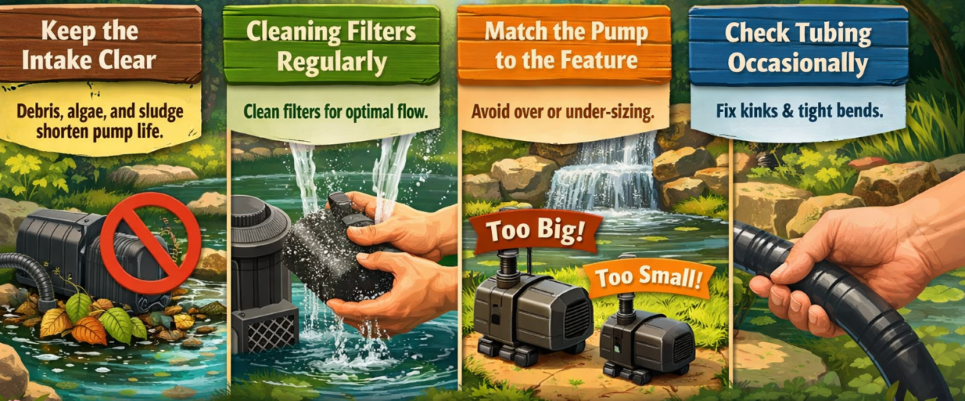
Regardless of which pump you choose, a few habits will dramatically extend its life:
- Keep the intake clear.
Debris, algae and sludge make pumps work harder, shortening their lifespan. - Clean filters regularly.
Many POPOSOAP pond pump systems include filtration to reduce clogging and maintain consistent water movement. - Match the pump to the feature.
Oversized pumps burn out faster, while undersized pumps are overworked. - Check tubing occasionally.
Kinks and unnecessary elbows reduce flow efficiency.
Conclusion: Choosing the Right Pump for Your Water Feature
Ultimately, it comes down to knowing what each pump was designed to accomplish. A pond pump keeps water healthy and circulating. A waterfall pump creates the strong, elevated flow that makes a spillway both look and sound beautiful. Both are important — just for different reasons.
With well-designed, user-friendly systems like POPOSOAP’s fountain pumps, pond circulation pumps and waterfall kits, you can match the right tool to the right job and create a backyard water feature that runs smoothly, efficiently and beautifully for years.
FAQs — Pond Pump vs. Waterfall Pump
What’s the difference between a pond pump and a waterfall pump?
Pond pumps circulate water. Waterfall pumps push water upward with higher pressure.
Can one pump do both jobs?
Sometimes, for very small ponds. For medium and large ponds, it’s usually better to use separate pumps.
Are waterfall pumps more expensive to run?
Not necessarily. Wattage matters more than pump category.
Which pumps run on solar power?
Smaller fountains, pond pumps and compact waterfalls can run on solar systems such as POPOSOAP’s solar-powered designs.
Are submersible pumps better?
For most home ponds and waterfalls, yes. They’re quieter and easier to work with.
About POPOSOAP
POPOSOAP is an international e-commerce brand specializing in garden pond and water feature products. Its product line is designed to enhance outdoor spaces while supporting ecological function, including reliable water access for small animals and wildlife.
Inspired by natural systems, POPOSOAP focuses on environmentally responsible, efficient designs suitable for a range of applications, from small backyard ponds to larger water features. The company’s approach emphasizes durability, sustainability and performance across varying climate conditions, helping maintain water availability for wildlife year-round.