Three successful show models demonstrate how goldfish organizations, koi clubs, retailers and pond-industry events can expand education, participation and sales.
By Gary Hater, Joshua McWilliams and Bryson Foss
Good news for the pond trade: Goldfish shows are on the upswing. Established events are filling their available exhibition space. New shows are attracting enthusiastic first-year participation and partnerships with koi clubs and pond retailers are introducing more people to the depth of the modern goldfish hobby.
The strongest examples do more than place attractive fish in tanks. They create a complete weekend experience built around competition, education, retail activity and community. Visitors can see excellent adult fish and promising young specimens. They can also learn what separates an exceptional fish from an average one and purchase new stock. In some cases, participants can enter a fish bought at the event directly into the show.
A Broader Picture of the Goldfish Hobby
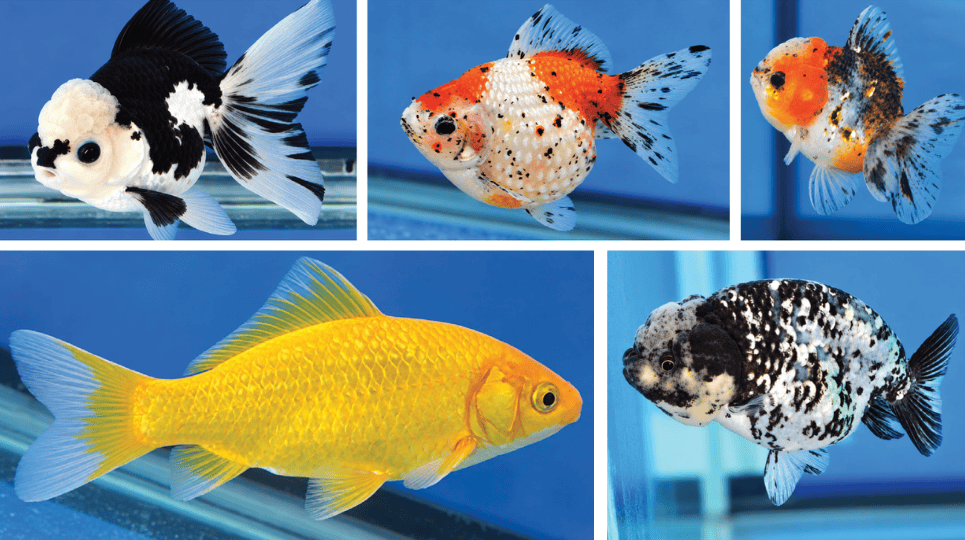
For many pond owners, the word goldfish still brings to mind a limited selection of familiar orange fish. A well-planned show quickly changes that perception. Modern North American events commonly offer 10 to 14 competitive classes and may present more than 20 varieties. Fish are generally divided between adults over 3 inches and young fish under 3 inches. This allows mature specimens and the next generation to compete on an appropriate stage.
The range can be remarkable. Pond varieties may include Bristol shubunkins, wakin, watonai, commons and tamasaba, along with rarities such as lemon-yellow commons, exceptional watonai and newer color expressions such as kirin tamasaba. Fancy classes bring together ranchu, oranda, ryukin, veiltails, telescope varieties, pearlscales and other specialized forms. The best examples can look as though they have been lifted from a glossy Asian goldfish book. They are large, balanced, intensely colored and expertly conditioned.
North American show structures borrow useful elements from other established animal exhibitions, including rabbit and dog shows. Major awards may include Grand Champion, Reserve Grand Champion, Baby Champion, Reserve Baby Champion, the Goldfish Council Award, Most Unique and honors for pond varieties. The Goldfish Council’s 500-point evaluation system gives judges a consistent framework for assessing quality. Various aspects of a fish’s appearance, condition and deportment are assigned weighted values specific to each variety and used to evaluate the goldfish.
Why Goldfish and Koi Belong Together
Goldfish and koi audiences already overlap. Both value water quality, filtration, nutrition, health, color, conformation and the satisfaction of raising fish to their potential. Yet goldfish add a different scale and visual experience to an event. A smaller exhibition footprint allows a club, retailer or expo to introduce a show without the space of a full koi competition.
For koi clubs, a goldfish division broadens the attraction for families, aquarium keepers and pond owners who may not yet be ready for koi. For retailers, the show floor becomes both a classroom and a marketplace. Customers learn to recognize quality while standing only steps away from fish, food, equipment and expert advice. For goldfish organizations, a koi partnership supplies an established audience, experienced volunteers and event infrastructure. Each group brings something the other can use.
Louisville: An Established Koi-and-Goldfish Partnership
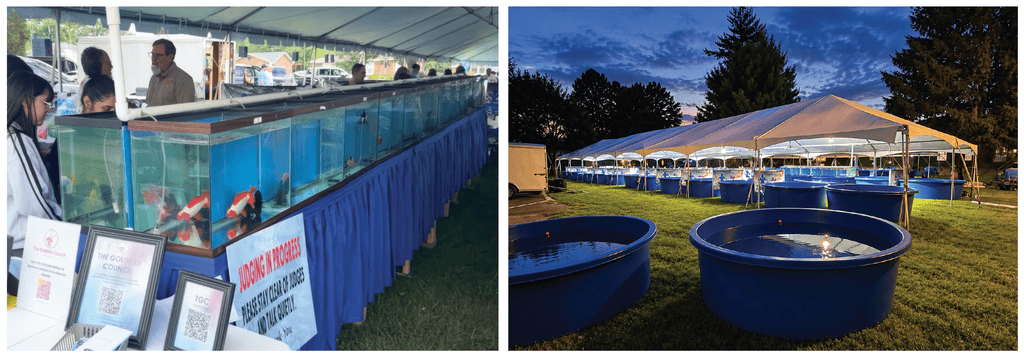
The 2026 Greater Louisville Koi and Goldfish Show demonstrates the value of adding goldfish competition to an established koi event. The show drew 75 goldfish entries. There was strong competition across oranda, ranchu/lionhead, ryukin, pearlscale, eye-growth, single-tail, wakin/jikin and special-variety classes.
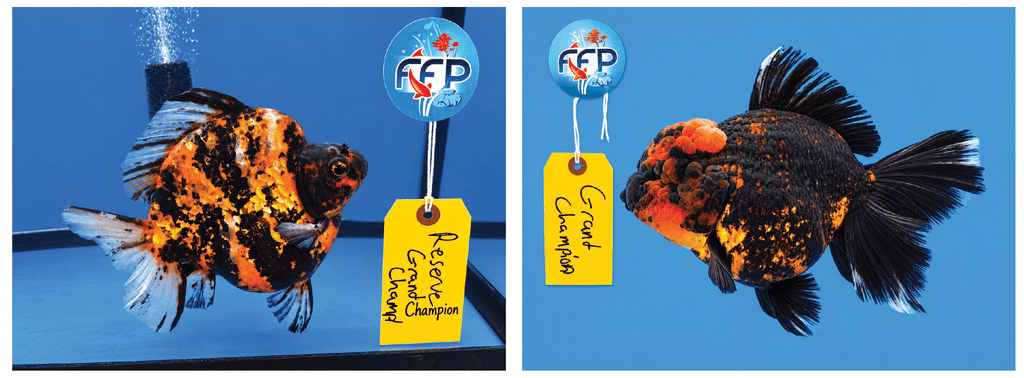
TGC-certified judge Chip Autry evaluated the field, with Joshua McWilliams, Gary Hater and Claire Beck supporting benching and show operations. Stephanie Virg earned Grand Champion with an oranda, Joshua McWilliams received Reserve Grand Champion with a calico pearlscale, and Gary Hater earned the Goldfish Council Award with a lemon-colored common. The winners reinforced an important lesson for the public: Quality is not confined to one fashionable variety. A beautifully conditioned pond fish can stand alongside the finest fancy goldfish.
Louisville’s model gives koi-show visitors another reason to linger, learn and return. It also provides goldfish exhibitors with an established venue and connects two communities that share many of the same husbandry concerns. The result is a fuller ornamental-fish event without forcing either hobby to give up its identity.
Ohio Goldfish Palooza IV: A Destination Event
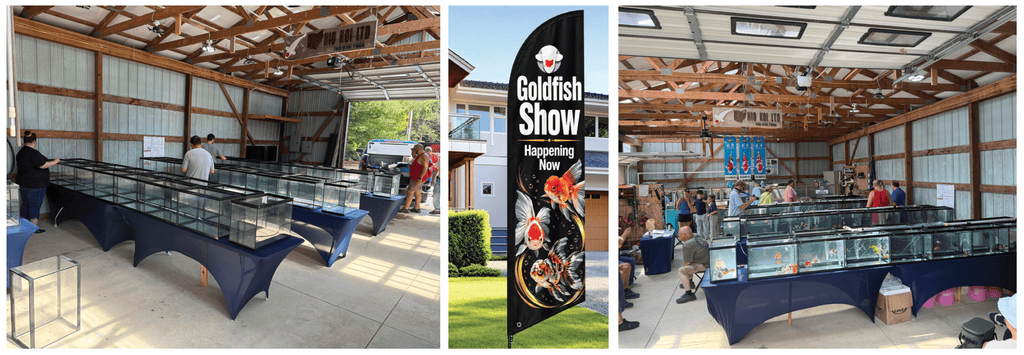
Ohio Goldfish Palooza IV represents the stand-alone retail-hosted model at a much larger scale. Held at Ohio Koi & Goldfish in Sunbury, Ohio, and presented in partnership with the Goldfish Council, the 2026 event filled all 50 show tanks with 194 entries. Exhibitors traveled from across the United States and Canada, and the fish represented bloodlines with origins around the world. With 194 entries, the event ranked among the largest stand-alone goldfish shows in the United States in 2026.
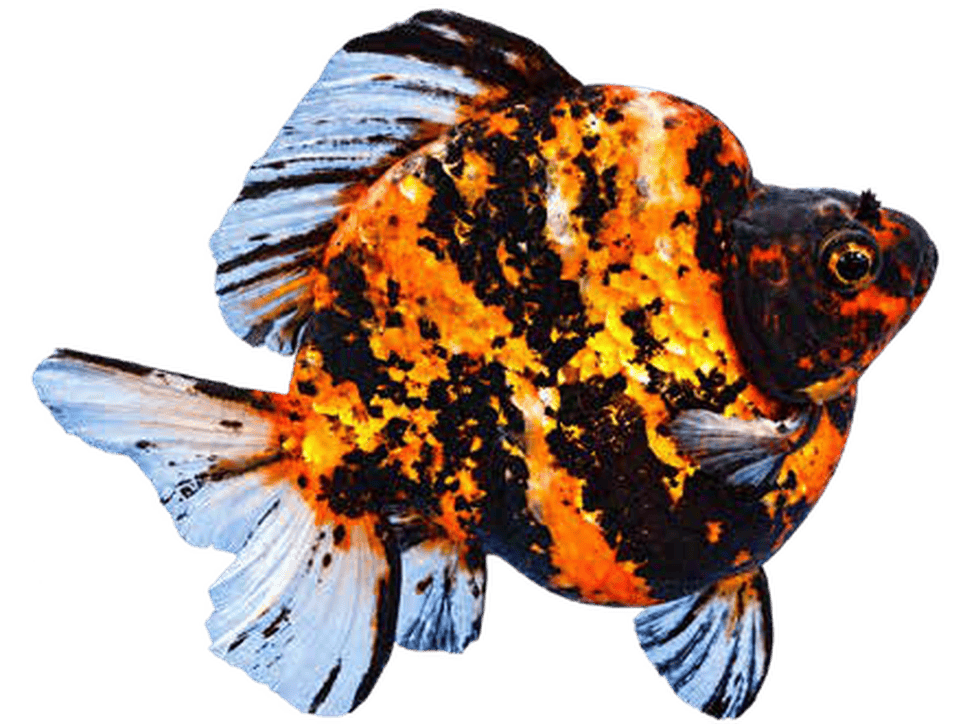
TGC-certified judge Dan Young of Indiana evaluated a remarkably deep field. Tim Asbill served as show writer and apprentice judge. Ranchu formed the largest class, with more than 55 entries, while oranda, veiltail and ryukin/tamasaba were also strongly represented. Joshua McWilliams earned Grand Champion with an adult tricolor oranda. Bryan Rhodes received the Goldfish Council Award with a bronze veiltail. Gary Hater earned Reserve Grand Champion with a tiger ranchu. Kelly Dixon captured both Baby Champion and Reserve Baby Champion.
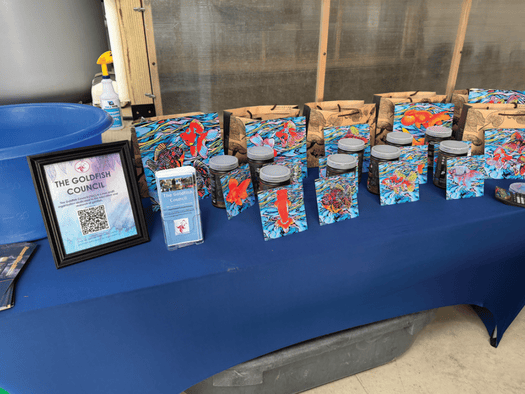
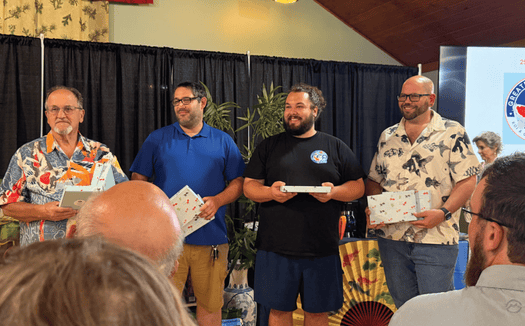
Palooza’s value extended well beyond the awards. Ohio Koi & Goldfish hosted a Goldfish Keepers Appreciation Sale. TGC judges served as personal shoppers to help visitors evaluate potential purchases. Educational seminars by Gary Hater and Joshua McWilliams gave beginners and experienced keepers an approachable place to discuss selection, care, breeding and showing. A bowl sale supported the event while helping attendees take home new fish.
The partnership works because each participant invests in the full experience. Hosts Todd and Amy Elliott and the Ohio Koi & Goldfish team provide the facility, tank storage and retail environment. Sponsors, donors and volunteers support awards, meals, setup, benching, sales, teardown and the many unseen tasks required to manage nearly 200 live entries. The show is a competition, but it is also a retail weekend, an educational program and a community gathering.
Koi Fest: A Goldfish First at a Koi Tradition
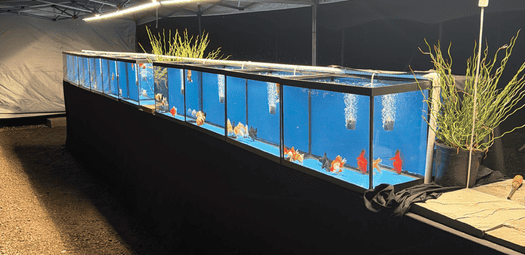
The inaugural Fitz’s Fish Ponds/TGC Goldfish Show demonstrated what can happen when a pond-industry business builds a show experience with intention. Held alongside the fifth annual Koi Fest, which welcomed more than 3,000 attendees, the competition introduced thousands of visitors to the diversity and beauty of fancy goldfish. Through a new partnership with the Goldfish Council (TGC), Fitz’s Fish Ponds established a professionally judged competition. The event was designed to elevate goldfish exhibitions to the same caliber as traditional koi shows and lay the foundation for years of growth.
Recognizing that many Koi Fest visitors would be encountering fancy goldfish for the first time, the Fitz’s team worked to create a professional presentation that showcased the fish at their best. Custom-built stands positioned tanks at a comfortable viewing height, while blue-painted backs and bottoms accentuated the striking colors and forms of the fish. Targeted overhead lighting and a centralized air manifold completed the display, creating a consistent, professional exhibition beneath a large event tent.
The show received 51 entries, filling all 20 available tanks. The competition attracted both experienced hobbyists and first-time exhibitors. Many participants purchased show-ready fish directly from Fitz’s Fancies, Fitz’s Fish Ponds’ new fancy goldfish division, during the event. That combination was especially meaningful for the pond trade. Visitors could purchase a fish, learn how it compared with others of its variety and immediately take their first steps toward becoming competitive exhibitors.
TGC-certified judge Rob Crosby evaluated a competitive field, with oranda and ranchu producing the largest classes. Most entries were at least 4 inches long, creating a particularly deep adult division. Hobbyists rounded out the competition with bubble eyes, telescopes, pearlscales and tamasaba, demonstrating the variety and growing appeal of the goldfish hobby.
Brittany Mockler earned Grand Champion with an impressive tiger oranda, narrowly edging out Herbert Fritch’s tiger ryukin, which received Reserve Grand Champion. Michael Weeks earned Baby Champion honors with a blue-base calico oranda.
The sold-out inaugural show demonstrated that thoughtful presentation, passionate hobbyists, available inventory and certified judging can transform an established koi event into an accessible gateway to the goldfish show hobby. More importantly, the partnership between Fitz’s Fish Ponds and the Goldfish Council created a foundation for growth. The event brought goldfish keeping to a broader audience while establishing Koi Fest as a destination for both koi and goldfish enthusiasts.
Building a Successful Partnership
These three events vary in size and setting, but they share a practical formula. A successful goldfish component needs a committed host, appropriate tanks and aeration, good lighting, clear show rules, certified judging, healthy fish-handling procedures and volunteers who understand both hospitality and operations. Education and sales should be planned as part of the event — not treated as an afterthought.
Retailers and clubs should also make entry feel approachable. Separating fish by size gives newcomers a realistic place to compete. A broad variety schedule helps pond fish receive the same respect as fancy varieties. Having knowledgeable staff helps customers connect what they see in competition with what they might raise at home. When possible, inviting event purchases into the competition creates an immediate bridge between shopper and exhibitor.
Promotion should emphasize the visual range of the hobby. A giant oranda, a refined ranchu and a rare watonai may appeal to different visitors, but together they tell a much more compelling story than any single variety can. Families are drawn to color and movement; serious hobbyists appreciate conformation and rarity; pond professionals gain opportunities to discuss systems, nutrition and long-term care.
A Growing Opportunity for the Pond Trade
The show season generally runs from April through late August, creating multiple opportunities for pond businesses and koi organizations. The recent results are encouraging: 75 entries alongside an established Louisville koi show, 51 entries filling a new 20-tank Fitz’s event and 194 entries filling all 50 tanks at Ohio Goldfish Palooza IV.
Those numbers matter, but the larger opportunity is what happens around them. Goldfish shows give customers a reason to travel, spend time at a venue, compare fish, ask better questions and purchase with greater confidence. They help breeders and exhibitors connect with the public. They give koi clubs additional content and new participants. Most importantly, they demonstrate that the goldfish side of the pond hobby is diverse, sophisticated and growing.
For a koi club or pond retailer considering a partnership, the invitation is simple: Start with the space and resources you have, work with an experienced goldfish organization and build an event that combines excellent fish with education and access. The first show may begin with 20 tanks. With the right partnership, it may not stay that size for long.
About the Goldfish Council
Founded in 2016, the Goldfish Council (TGC) is a nonprofit, all-volunteer organization dedicated to promoting the keeping, breeding, showing and appreciation of goldfish. Established by passionate hobbyists and amateur breeders, TGC advances the hobby through education, certified judging, competitive show standards, club presentations and an active online community. Its resources cover everything from goldfish care and breeding to the rich history and culture of the hobby.
Learn more at thegoldfishcouncil.org.