Original photographs and observations by Angel Peña, Ecuador
Few animals capture visitors’ imagination like the Galapagos tortoise. Their immense size, remarkable longevity and connection to one of the world’s most celebrated wildlife destinations have made these gentle giants enduring symbols of conservation and environmental education.

Whether encountered in zoological institutions, breeding centers, conservation facilities or educational exhibits, Galapagos tortoises have a unique ability to engage audiences of all ages. Visitors who may breeze past other exhibits often stop in amazement when they encounter a reptile capable of living for more than a century and weighing hundreds of pounds.
Their impressive appearance is only part of their appeal. Galapagos tortoises represent one of the great conservation success stories of modern wildlife management. Once pushed toward extinction by human activities, many tortoise populations have rebounded through decades of dedicated conservation work, captive breeding programs, habitat restoration and public education.
Today, these remarkable reptiles serve not only as ambassadors for the Galapagos Islands, but also as living reminders of the importance of protecting biodiversity around the world.
An Animal That Changed Science

The significance of Galapagos tortoises extends far beyond their physical size.
They are closely connected to one of the most important chapters in scientific history. The unique wildlife of the Galapagos Islands played a critical role in shaping Charles Darwin’s understanding of evolution during his voyage aboard HMS Beagle in 1835.
Although Darwin observed numerous species during his travels, differences among tortoise populations living on separate islands offered important clues about adaptation and environmental specialization. Over time, scientists discovered that tortoises from different islands developed distinct shell shapes and body characteristics influenced by local environmental conditions.
Those observations helped lay the foundation for modern evolutionary biology.
Today, every Galapagos tortoise exhibit offers an opportunity to connect visitors with that scientific history. By linking living animals to evolutionary discovery, educational institutions can transform a simple wildlife encounter into a lesson about adaptation, ecology and scientific inquiry.
Built to Endure
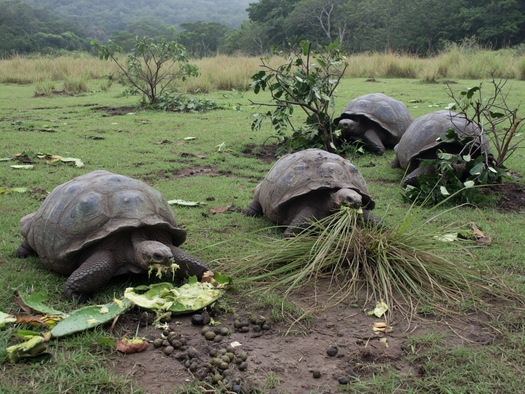
Galapagos tortoises are among the largest tortoise species on Earth.
Adult males can weigh more than 500 pounds and may live well over 100 years under favorable conditions. Their massive shells provide protection, while their slow metabolism allows them to survive in environments where food and water may be seasonally limited.
These adaptations have helped tortoises thrive on the isolated volcanic islands of the Galapagos archipelago for thousands of years.
Visitors are often surprised by the calm, deliberate nature of these animals. Unlike many active exhibit species, tortoises move slowly and conserve energy. Yet that quiet behavior can encourage guests to spend more time watching them.
Longer observation creates valuable opportunities for interpretation and education. Visitors begin to notice subtle details such as feeding behavior, shell structure, posture and social interaction that might otherwise go overlooked.
In many ways, the tortoise’s slow pace becomes an advantage in an educational setting. It encourages visitors to slow down as well and engage more deeply with the animal in front of them.
Creating Lasting Visitor Experiences
One reason Galapagos tortoises are so effective in educational exhibits is their ability to create an immediate emotional connection.
Children are often amazed by their enormous size. Adults are fascinated by their age and evolutionary history. Families may compare the tortoises’ lifespans with their own, creating a powerful sense of perspective.
Questions naturally follow.
How old are they? How much do they weigh? What do they eat? How long can they live? Why are they found only in the Galapagos Islands?
Those questions create ideal opportunities for environmental education.
Unlike wildlife exhibits that may require extensive interpretation before attracting attention, Galapagos tortoises generate curiosity almost immediately. Their presence alone encourages learning.
For institutions focused on conservation outreach, few species provide such an effective platform for communicating complex environmental ideas in an approachable way.
Designing Exhibits That Educate

Successful Galapagos tortoise exhibits must balance animal welfare, visitor engagement and educational value.
Because tortoises are terrestrial reptiles, exhibit design often emphasizes open viewing areas, natural substrates, vegetation, shade structures and accessible educational signage.
The best exhibits allow visitors to observe natural behavior while maintaining environments that support animal health and welfare.
Space is especially important. Large tortoises need room to move, forage and interact with their surroundings. Environmental enrichment can further encourage natural activity while creating additional educational opportunities for visitors.
Naturalistic habitats also help reinforce conservation messages by illustrating the types of environments these animals occupy in the wild.
Rather than presenting tortoises as isolated specimens, modern exhibit design can tell a broader ecological story about the Galapagos Islands and the evolutionary processes that shaped their wildlife.
From Decline to Recovery

The history of Galapagos tortoises is closely connected to human activity.
Beginning in the 17th century, sailors, whalers and settlers harvested thousands of tortoises for food. Introduced species such as goats, pigs, rats and dogs created additional pressure by damaging habitat and preying on eggs and hatchlings.
By the 20th century, several tortoise populations had experienced dramatic declines, and some were lost entirely.
Recognizing the severity of the situation, conservation organizations and government agencies launched extensive recovery efforts. Captive breeding programs, habitat restoration, invasive species control and scientific monitoring became central components of tortoise conservation.
Those efforts produced encouraging results.
Numerous tortoise populations began to recover, while breeding programs successfully reintroduced young tortoises into restored habitats. What once appeared to be a conservation tragedy gradually became one of the world’s most inspiring wildlife recovery stories.
Today, Galapagos tortoises demonstrate what can be achieved when science, conservation and public support work toward a common goal.
Why Giant Tortoises Inspire

Many species contribute to conservation education, but Galapagos tortoises possess several characteristics that make them especially effective ambassadors.
They are instantly recognizable. Even visitors with limited wildlife knowledge are familiar with giant tortoises and their association with the Galapagos Islands.
They also have extraordinary stories to tell. Their connection to evolution, island ecology, conservation biology and wildlife recovery allows educators to explore many subjects through a single species.
Perhaps most importantly, they inspire empathy.
Their slow movements, peaceful demeanor and remarkable longevity often create an emotional response in visitors. People naturally become invested in animals they perceive as ancient, vulnerable and unique.
That connection can transform conservation from an abstract idea into something personal.
Longevity and Public Fascination

Few animals inspire fascination through longevity quite like giant tortoises.
Some individuals have lived long enough to witness multiple generations of human history. That fact alone often becomes one of the most memorable parts of a visitor’s experience.
Children may react with amazement when they learn that a tortoise could be older than their grandparents. Adults often reflect on the passage of time and humanity’s responsibility to protect species capable of such extraordinary lifespans.
That perspective can leave a lasting impression.
In a world increasingly focused on rapid change, Galapagos tortoises represent patience, resilience and continuity. They remind us that conservation efforts often must be measured not in months or years, but in decades and generations.
Photography as a Conservation Tool
Photography plays an important role in extending the educational impact of tortoise exhibits.
Images allow visitors to revisit experiences, share discoveries and continue learning long after they leave a facility. Photographs also provide valuable resources for educational materials, outreach programs, publications and conservation campaigns.
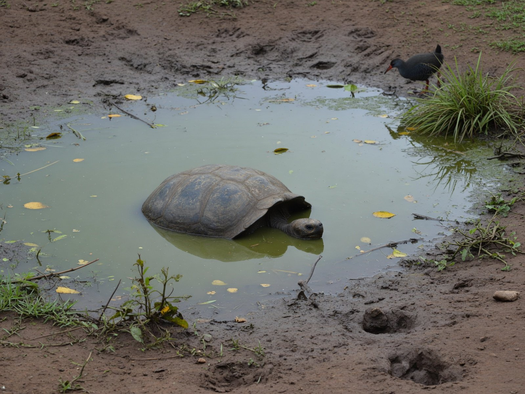
The photographs accompanying this article were taken in Ecuador and document the impressive appearance and behavior of Galapagos tortoises in managed environments.
Close-up images reveal details of shell structure, facial features and body proportions that visitors might otherwise overlook. Wider images help communicate the scale of these extraordinary animals and the environments designed to support them.
When paired with interpretation and storytelling, photography becomes a powerful tool for promoting appreciation and understanding of wildlife.
Inspiring the Next Generation

Perhaps the most important role played by Galapagos tortoises is their ability to inspire future generations.
Many conservation professionals can trace their interest in wildlife to a memorable childhood encounter with an animal at a zoo, aquarium or educational facility. For some, that first spark of curiosity begins with a single species.
Galapagos tortoises are particularly effective at creating those moments.
Their size captures attention. Their history inspires curiosity. Their conservation story offers hope.
A child who learns about tortoise recovery efforts today may become tomorrow’s biologist, veterinarian, educator or conservation advocate.
In that way, the value of a tortoise exhibit extends far beyond the animals themselves. Each visitor leaves with the potential to become a stronger supporter of wildlife conservation.
Lessons Beyond the Galapagos
Although Galapagos tortoises are found naturally only on a remote Pacific archipelago, the lessons they teach have global relevance.
Their story demonstrates how human activity can threaten vulnerable species. It also shows how dedicated conservation action can help reverse declines and create opportunities for recovery.
Those lessons apply not only to island ecosystems, but to wildlife conservation efforts worldwide.
Visitors who learn about Galapagos tortoises often leave with a broader understanding of biodiversity, habitat protection, invasive species management and the importance of long-term environmental stewardship.
Few species communicate these ideas as effectively as giant tortoises.
Living Symbols of Conservation
Galapagos tortoises remain among the most iconic reptiles in the world and some of the most effective ambassadors for wildlife conservation.
Their immense size, extraordinary longevity, scientific significance and inspiring recovery story make them invaluable educational animals in zoological and conservation settings.
Whether introducing visitors to evolutionary biology, illustrating the importance of habitat restoration or inspiring future conservationists, these gentle giants continue to play a vital role in connecting people with the natural world.
For institutions dedicated to conservation education, Galapagos tortoises offer something truly exceptional: the ability to transform curiosity into understanding and admiration into action.
As visitors stand before these ancient reptiles, they encounter more than a remarkable animal. They experience a living symbol of resilience, scientific discovery and hope. In that moment, curiosity can become appreciation, and appreciation can become a deeper commitment to conserving the natural world.
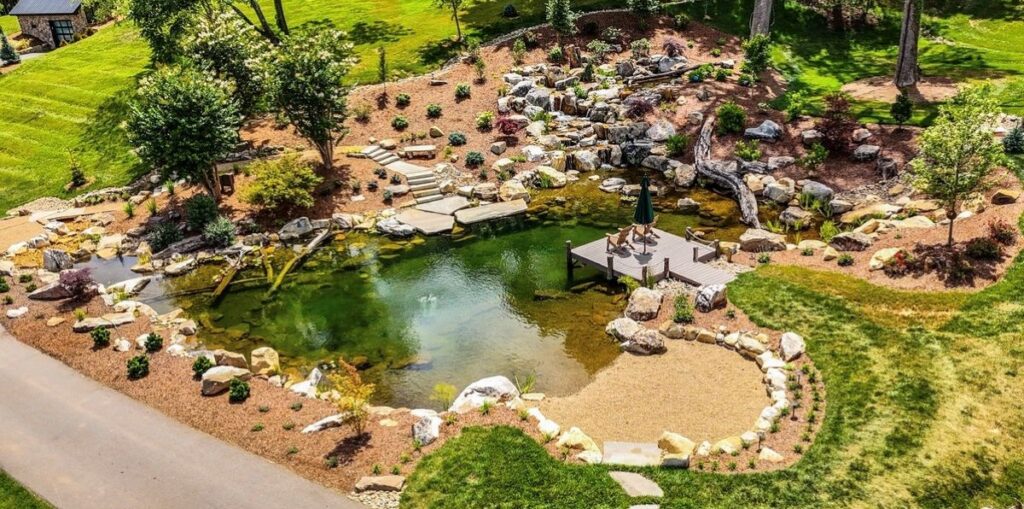
Learn about tortoise ponds.
About the Author
Angel Peña is an Ecuadorian wildlife photographer, nature writer, and independent author whose work focuses on freshwater ecosystems, reptiles, fish, birds, and environmental education. Through photography and storytelling, he seeks to promote appreciation for biodiversity, conservation awareness, and the protection of wildlife throughout Ecuador and South America. His articles combine natural history, conservation themes, and educational outreach designed to connect readers with the natural world.