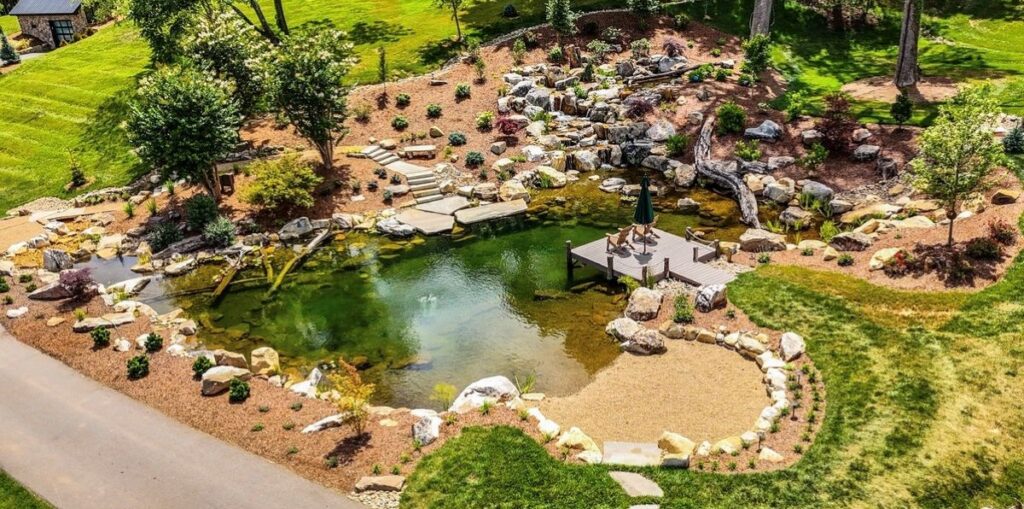
If you’ve spent more than a minute around koi ponds (and let’s face it, most pond builders spend way more than a minute), you’ve likely seen graceful koi with long, flowing fins that glide like dancers beneath the water’s surface. These are usually the fish that make clients stop mid-sentence and point. Butterfly koi have a way of doing that, adding movement and elegance that immediately draw the eye.
Butterfly koi, also known as longfin koi (Hirenaga in Japanese), are not a separate species but a variation of Nishikigoi distinguished by elongated fins. Because of their flowing finnage, they are sometimes assumed to be fragile. When bred intentionally, they grow, thrive and perform just like traditional koi, offering pond builders another design element without compromising health or longevity.
From Novelty to Refined: The Evolution of Butterfly Koi

Early Butterfly koi production emphasized fin and tail length, often at the expense of fin structure and overall proportion. Over time, responsible breeders learned that true beauty comes from balance. Today’s high-quality Butterfly koi reflect identifiable varieties with strong body conformation, vibrant color and fins that complement the fish rather than overwhelm it.
Modern judging standards developed by the American Koi Judges Association recognize Butterfly koi as their own class while still holding them to traditional koi benchmarks. These standards emphasize proportion, movement and harmony — not simply the longest fins.
Approximately, 20 years ago, we at Kloubec Koi Farm, were asked to contribute to the development of the AKA Longfin Judging standards. We were honored to lend a hand, or a fin. That collaboration reinforced an important principle: Like most points of appreciation in koi, balance is paramount, and fins are no exception.
Traditional Koi vs. Butterfly Koi: Same Foundation, Different Emphasis

Traditional koi and Butterfly koi share the same foundation and can be found in many of the same familiar varieties, including Kohaku, Sanke, Asagi, Yamabuki and more. Butterfly koi are also produced with backyard pond owners in mind, including popular Gin Rin scalation, adding a little extra visual sparkle that catches light and draws attention without overpowering the fish.
Doitsu types are just as captivating, with large, prominent scales adding another visual dimension, and Butterfly koi are also produced with this scale variation.
Some pond owners also enjoy incorporating koi based on cultural traditions, such as the belief that a black koi brings good luck. This is an idea rooted in Japanese folklore and personal preference rather than pond design requirements.
Koi are evaluated on health, body conformation, color quality and overall balance. Traditional koi place the greatest emphasis on body conformation, while Butterfly koi add a heightened emphasis on fin and tail development and proportion.
Butterfly koi are not defined by elongated pectoral fins alone. All fins are extended to varying degrees, including the caudal (tail), dorsal (top), ventral pair and anal fins. The pectoral fins should form a near-matching pair, well-proportioned to the body and to one another. All elongated fins are attributes of the fish and work together to complement overall balance and create a unified and beautiful silhouette.
Butterfly Koi as Living Design Elements
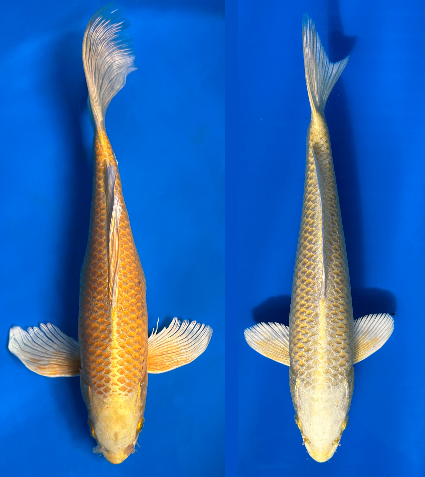
Butterfly koi bring something to a pond that goes beyond color and pattern, they bring dramatic movement. Their elongated fins interact with currents, waterfalls and open swimming lanes in a way traditional koi simply do not.
In professionally designed ponds, Butterfly koi occupy the full water column, gliding beneath the surface and adding a dynamic aesthetic that enhances the overall pond experience. For pond builders, this means the fish themselves become part of the design, reinforcing flow lines and adding visual interest even when the pond is otherwise still.
Graceful fins slow the eye, drawing attention to movement rather than just size or color. Over time, many hobbyists form a genuine attachment to their koi.
As the fish become familiar with their surroundings and routines, it’s not uncommon for them to recognize their owners and even accept food directly from a hand, further strengthening the connection between pond owner and pond.
For pond builders, this kind of ongoing interaction transforms a completed project into a lasting experience — one that continues to deliver enjoyment, conversation and value long after construction is finished.
Butterfly Koi and Breeding Programs

The origins of butterfly koi are traced to early longfin introductions, and breeders worldwide have played a role in shaping how the type is bred today. Selective breeding has increasingly emphasized fin structure, symmetry and overall balance while maintaining identifiable varieties.
As an American koi breeder, we focus on producing Butterfly koi that perform reliably in retail settings and in U.S. pond environments, supporting the needs of pond builders, retailers and their customers.
One of the most persistent misconceptions about Butterfly koi is that their elegant appearance makes them delicate or weak.
In reality, Butterfly koi are just as hardy as traditional koi when bred, raised and handled properly.
Another common misconception is that Butterfly koi do not grow as large or as robust as traditional koi.
The extended length of the fins and tail can create the visual impression of a slimmer fish, even when overall body size and mass are comparable.
Why Sourcing Matters for Pond Professionals
For pond builders, koi sourcing is not just a design decision — it is also a long-term risk-management consideration. Health consistency, acclimation, and predictable performance all play important roles in how a pond system matures over time.
Professionals who prioritize stable breeding practices, proper conditioning and thoughtful selection are better positioned to deliver long-term success for their clients. In this way, fish choice becomes part of the broader system design — not an afterthought.
Sourcing koi that are well-adapted to local climates, water conditions and seasonal changes can help reduce stress on fish, support longevity and improve the overall experience for pond owners.
Butterfly Koi and Kloubec Koi Farm
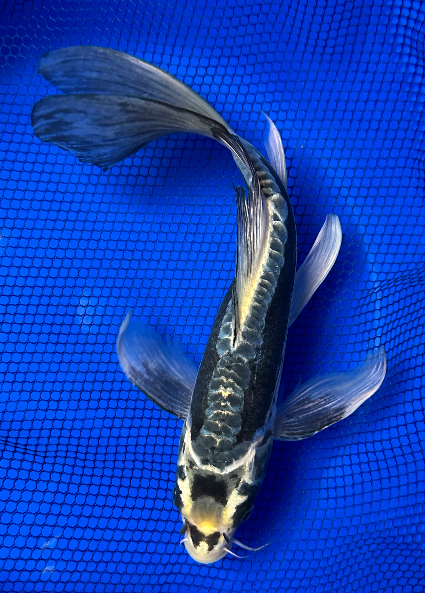
listing at KloubecKoi.com.
At Kloubec Koi Farm, all standard koi and Butterfly koi are bred, raised and conditioned under direct care, supported by 80+ acres of earthen ponds and over 300,000 gallons of indoor growing capacity. This allows for year-round supply of healthy, stable fish.
Each koi is carefully packaged and shipped overnight, arriving healthy and ready for acclimation—pond-side or at retail locations. All Kloubec koi are KHV-free certified by the U.S. Department of Agriculture (USDA).
The result: healthier koi, fewer variables and long-term success for the ponds you build.
Learn more: “Judging Longfin – The Evolution Continues”
Read or download the AKCA judging paper “Judging Longfin – The Evolution Continues”
For more information on koi fish and Butterfly koi, contact the author at support@kloubeckoi.com.