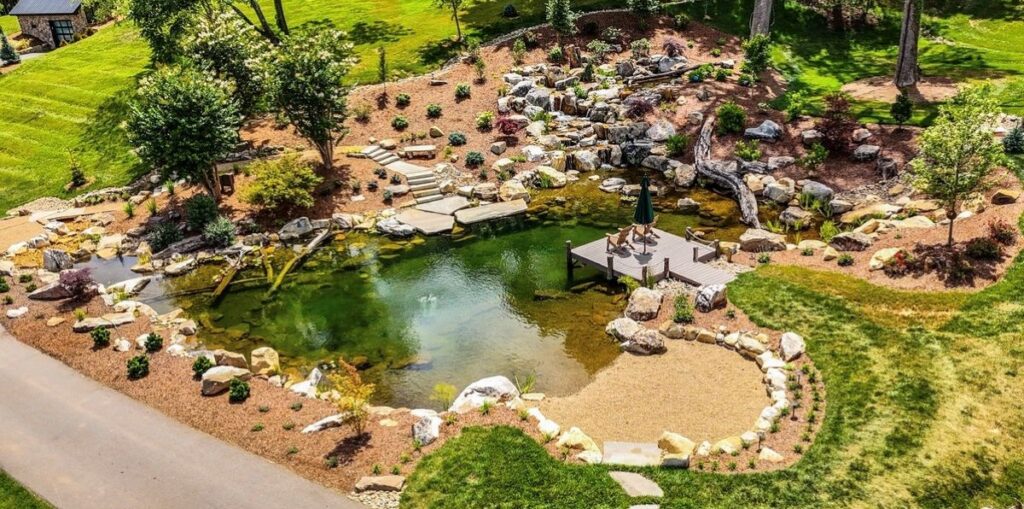

There is something universal about water. It draws people in, calms them, and invites them to slow down. That is why ponds, waterfalls and streams resonate so deeply. They are not just features. They are experiences, moments and places people want to be.
Yet many pond builders struggle to communicate that experience before a client ever steps onto a property. Most people encounter your work first through a screen, a brochure, a magazine or a proposal. Long before they hear the sound of the water or feel the air change near a waterfall, they are forming opinions based on what they see.

Quality photography for the landscape trade is not just documentation. It is something that turns craftsmanship into clarity. It helps people understand what you do and how it could be valuable to their own lives.
This matters more than ever. In a world where attention is limited and choices are endless, your visuals often speak before you do. Before anyone asks about budgets, timelines or materials, they are answering a quieter question for themselves:
“Do I want this?”
Strong photography makes that answer easier and draws them in.
Curiosity: Quality Pond Photography Attracts Your Ideal Audience

Most clients meet your work long before they meet you. They see it on your website, on social media, in a magazine or through a referral text from a friend. That first interaction is almost always visual. They are not taking time to read your credentials or learn about your process. They are scanning and deciding whether you are worth pursuing any further in about three seconds.
If your images do not stop them, little else gets a chance.
This is where curiosity lives. Not in long explanation, but in emotional response. A strong image invites someone to pause. A weak one gives them permission to move on.
Pond builders understand the importance of great images but often underestimate how much of their business depends on this brief moment of attraction. You can create extraordinary water features, but if the photos are poorly composed, cluttered or taken at the wrong time of day, much of that craftsmanship disappears. Water can look dull instead of reflective. Stonework appears flat instead of textured, and thoughtful plantings can blend into the background.
None of this reflects your actual skill. However, it does reflect how the work was captured, which can potentially harm your sales.
When people cannot clearly see beauty, they will be distracted by what you likely did not intend to be shown, and you will miss the opportunity to engage with them in an emotional way. That is the real risk of weak photography. Not only that it looks bad, but that it fails to communicate anything at all.
At this stage, your job is not to overcomplicate the image with heavy-handed editing or nuanced composition. Rather, it is to simply invite the audience into a story. The goal is simple: Make someone stop and want to know more by showing an image that provides something the audience can aspire to. If they see themselves in the space you have created, they will want one of their own all the more.
Enlightenment: Building Trust by Showing Your Value

Once curiosity is sparked, the next step is building trust with your audience. Contractors and designers often make the mistake of trying to explain their value with industry language when what they really need is visuals to help provide context. This “proof in the pudding” lays the foundation for creating the trust a client needs to feel comfortable working with a contractor.
Your work is layered. It is not just the physical materials like stone and water; it is composition, balance and integration with the surrounding environment. These things are difficult to describe but easy to see and feel when photographed well.
Good imagery helps clients understand what they are paying for. It shows craftsmanship. and intention. It shows that what you build is not accidental.
This matters because price is rarely the real objection. Uncertainty is. When people do not understand the difference between one water feature and another, everything starts to look the same. Photography helps separate thoughtful design from generic installation.
Wide shots show how a feature shapes a space. Medium shots reveal movement and flow. Close-ups highlight details that might otherwise be missed. Use text callouts overlaid on images so your client knows the difference between various parts of the water feature, such as skimmers, biofiltration and bog plants.
Together, these perspectives tell a fuller story. They help people see what makes your work distinct and, more importantly, that you are intentional about the materials you use because they are functional, not just fillers to make a quote bigger.
Use strong photography to help build trust with your client so you can avoid obstacles when it is time to sign a contract. Examples include presentations, case studies, before-and-after images and designs with images that highlight key features.
Commitment: Customer Confidence to Move Forward

Let’s face it: Water features are emotional purchases supported by logic. People want them because they feel drawn to them, but they hesitate because of the commitment involved. Cost, time disruption, permanence and maintenance are just a few of the obstacles that can arise.
Photography plays a quiet but powerful role here.
When people can clearly see what they are getting, they feel safer moving forward. Strong imagery answers questions they may not even know how to ask. Will this feel peaceful or overwhelming? Can this work in my space? Will it look natural? Will it feel worth the investment?
Words may struggle to resolve these doubts. Images of your work can do it instantly.
Photography becomes part of your sales process whether you intend it to or not. It appears in proposals, presentations, emails and referrals. It shapes how seriously you are taken, especially when it is time to ask for the sale.
High-quality visuals signal professionalism. They suggest that you care about how your work is presented and that this attention to detail carries over into how people assume you will handle their project. By this point, your customer should be confident that you will do what you say you will do and that moving forward feels logical.
Timing: When You Shoot Matters

important role in providing a different experience for the viewer.
Light is one of the most overlooked elements in water feature photography. It has a greater impact on the final image than most camera settings ever will.
Early morning and late evening, often referred to as golden hour, tend to produce the most flattering light. The sun sits lower in the sky, shadows become longer, and overall contrast softens. This helps reveal texture on hard surfaces like rocks and pavers, depth in water and reflections, all of which are essential to showing water features at their best.
Midday light, by comparison, is often harsh and unforgiving. It creates distracting highlights on water and forces deep shadows into areas where detail should be visible. Even beautifully designed features can look underwhelming under the wrong light.
This does not mean every project needs a perfect sunset shoot. It simply means timing matters. Take note of how light changes a scene, and you will begin to recognize opportunities. Returning to a site at a different time of day can completely transform how a project is perceived. Every site is different. If possible, experiment with different times of day using your phone and decide what you like best. Then come back later to photograph the site when it looks the way you want to showcase it.
Capturing Motion: Making Water Look Like Water

A common mistake in water feature photography is freezing the water completely. Not physically freezing it, but making it look like time stopped. When shutter speeds are too fast, waterfalls look stiff and awkward, and streams lose their sense of flow. The result feels static rather than fluid.
Slower shutter speeds create a softer, smoother look that more closely matches how we experience water in real life. This technique gives waterfalls a silky appearance and helps streams feel dreamy and fluid rather than rigid and stuck.
To achieve this in bright conditions, photographers often use neutral density filters. These act like sunglasses for the lens, reducing the amount of light entering the camera. This allows for slower shutter speeds without overexposing the image. Neutral density filters are also available for mobile phones.
Whether using a phone or a dedicated camera, mount it on a tripod to keep the image sharp.
Sometimes it makes sense to use a faster shutter speed. This is most effective in the details, where you want to stop time and capture a single moment rather than blur it together. Reserve these moments for close-up shots of droplets or sprays of water. They give viewers the opportunity to see something their eyes might otherwise miss, which can be just as captivating.
Whether using long or short exposures, your images should reflect the emotional experience of being there so they resonate more deeply with viewers.
Showing Life: People, Pets and Presence

Many pond photos are technically beautiful but emotionally empty. The feature looks perfect, but no one seems to belong there.
This is a missed opportunity.
People are not buying pumps, liners and stone. They are buying moments: quiet mornings with coffee, conversations by the water, kids exploring or pets cooling off.
Including people or animals in your images helps viewers imagine themselves in the space. It shows scale, purpose and use.
These moments do not always need to be staged like a big-budget commercial. In fact, the most compelling images often feel candid because they are. A few props and some gentle direction are usually enough, especially if the space is well crafted. Consider what your ideal customer would want to picture for themselves and let that guide how you direct activity in the scene.
These details add warmth and relatability. They remind viewers that water features are not just visual elements. They are lived-in spaces.
Composition: What You Leave Out Matters

Every image tells a story. But is it the story you want to tell?
If the frame is cluttered, the story becomes confused. That confusion can lead to uncertainty for the viewer. They may sense that something feels off without being able to articulate why. Unfortunately, that usually creates problems when the image is meant to build trust and move a prospect closer to a sale.
Good composition guides the viewer’s eye. It shows them what matters. Take a moment to assess what truly matters in the frame.
Ask yourself what the photo is actually about. Is it the waterfall? The stone outcropping? The way the feature integrates with the surrounding landscape? Let the feeling of standing there guide your composition.
Change your angle. Lower your perspective. Shooting from a child’s viewpoint can add intimacy and depth. For a layered look, shoot through foreground elements like plants or stone. These choices affect both composition and emotion.
Remember, it is less about what is in the frame and more about what you leave out. If you want a clean, uncluttered look, remove unnecessary items before shooting. Straighten furniture, blow off patios and skim debris from the water’s surface.
Images with strong composition feel effortless and unforced, much like the trust you want to build with your customers.
Specialized Perspectives: Underwater and Aerial Views
Some of the most compelling water imagery comes from perspectives people rarely see.
Underwater shots reveal fish, textures and movement beneath the surface. Aerial images show how a feature fits into its larger environment. Both can add depth and intrigue to your portfolio.
These approaches require specialized gear, training and safety considerations. Underwater housings can be expensive. Using a drone commercially requires proper licensing and responsible operation.
These techniques are not necessary for every project, but they can elevate storytelling when used thoughtfully. If a client has special fish or underwater details you want to highlight, consider an underwater housing. If a feature has a striking layout from above, aerial photography can capture that perspective and draw attention.
For those interested in these approaches, working with a professional who understands both photography and water environments can save time, frustration and risk.
To learn more about drone photography click here.
Why This All Matters
Great photography is not about showing off. It is about showing your value so you can attract customers, earn their trust and give them confidence in working with you. Your work deserves to be seen the way it feels in real life: intentional and inviting. When that feeling comes through in your images, people do not just notice your work, they connect with it.
Clear visuals build trust. They help clients understand what you do without long explanations. They answer questions before those questions ever need to be asked. When people can clearly see what you build and how it fits into real-life settings, they move forward with confidence and make decisions with less hesitation.
Over time, photography becomes more than a marketing tool. It becomes part of your craft. Just as you set stone, shape water and design experiences, you also guide perception. Visual storytelling determines whether your work feels like a commodity or something deeply personal and worth the investment.
You already build things that make people stop and stare. The right imagery simply makes sure they do.
About the Author
Chris major is a photographer, brand strategist and owner of CM Images, LLC. He works with pond builders and water artisans to help them present their work with clarity and purpose. All images embedded within this article have been photographed by Chris Major, owner of CM Images, LLC.