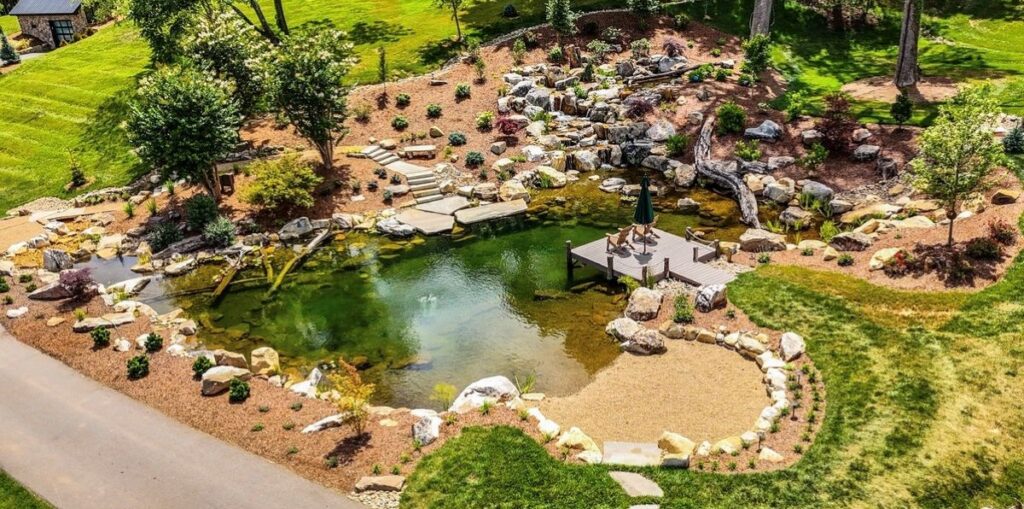
One of the most challenging aspects of the pond and waterscape industry is helping clients visualize a masterpiece that doesn’t yet exist. As designers, we are often tasked with presenting a concept that lives only in our imagination. I mean, how do you paint a Mona Lisa before it is painted? Explaining sight, sound, scale and movement before a single rock is placed is one of the most difficult challenges we face every day as pond artisans. Not only must we help the client conceptualize our vision, but then we also need to sell it. For this reason, mastering the presentation process becomes just as important as mastering the craft itself.

Like many in the industry, my background began in landscape design. Working with architects, city officials, foremen, homeowners and HOAs taught me how to communicate ideas clearly and confidently. But when I launched my company, Aquatica, more than 26 years ago, I quickly learned that presenting pond projects required a completely different approach. Water is dynamic, emotional and experiential — and clients need help understanding what that means for their property.
Over the years, that lesson shaped how I develop presentations, communicate vision and guide clients through the design process. While every company will approach this differently, there are several universally effective strategies that pond professionals rely on today.
Building Trust Before Building the Pond

Trust serves as the foundation of every successful presentation. Clients may know they want a water feature, but they often have no idea what style, size or form it should take. They may not understand stone types, elevations, hydraulics or even why they’re drawn to water in the first place — only that they are.
What we, as artists and professionals, do is like a fingerprint — no two water features are the same. While it can be difficult to zero in on a customer’s vision, it also becomes our responsibility. It becomes our job to uncover those motivations through conversation, questions and observation.
- Key considerations often include:
- What experience does the client want to create?
- How will the water feature be used day to day?
- What size project are they envisioning?
- Which aesthetic direction feels most natural to them? Will it be formal or natural? What kind of stone will be used?
Try to get into the customer’s head, learn how to gain their trust and ultimately get hired to bring that vision to life. Remember, not everyone is your customer. The relationship must be a good fit, and gaining trust is the single most powerful tool in presenting the vision and building the dream.
Pro Tip: Build a human relationship before presenting the artistic one. Find something in common that you and the client both have that has nothing to do with ponds and water features. Use this as a common bond.
When the Site Meeting Is the Presentation
There are occasions when a simple site meeting and discussion is all that is needed. You are the presentation, and they trust your thoughts and ideas. One strategy we use at Aquatica is to provide the customer with our Aquatica Dream Book, which contains examples of our projects. From there we are able to brainstorm their ideas. Then, the customer takes a leap and puts everything into your hands. They want to hire you on the spot and ask, “When can you start?”
This is the ideal client — but a rarity to find.
Over many years of building a brand, the presentation of your company and the reputation it has generated will create a confidence that makes clients want not just anyone, but you as the professional.
Visualizing a Project with Ground Markings and Quick Sketches
For smaller or straightforward backyard projects, physical ground markings can be one of the clearest and most effective presentation tools. Using marking spray paint or a garden hose to outline the future pond or stream helps homeowners grasp size, flow direction and real-world proportions. This can be simple and highly effective in the right situation and a great way to present an idea and design.

Some designers also bring sketch pads to produce fast, rough 2D sketches on-site. While not formal renderings, these sketches can spark excitement and help confirm that designer and homeowner are imagining the same concept.
Pro Tip: When clients contribute to early sketches or layout ideas, they feel ownership in the process and it gets them even more excited for the build.
Rendering Options for Project Visualization
In pond construction, renderings are a powerful presentation tool, allowing clients to visualize water flow, elevation changes, rock placement, and overall scale before a single stone is set. From hand-drawn concepts to 3D models and photorealistic renderings, these visuals help communicate design intent, refine details, and align expectations early. Strong presentation renderings build client confidence, support approvals, and set the foundation for smoother, more successful pond builds.
2D Renderings: The Presentation Powerhouse

Colored 2D renderings remain one of the most widely used and effective presentation tools in the industry. Drawn to scale or digitally, they provide a clear, artistic representation of the proposed feature. In addition to helping clients visualize the design through a professional presentation appearance, there are many practical benefits of 2D renderings. They are a great way to “plug in” a water feature into a landscape design already in progress with a landscape company and can provide clear communication of scale, style and elevation to both the client and your construction team. They also serve as reliable reference material throughout the build.
At Aquatica, our single best approach to pond presentations is a 2D colored rendering in 1/8-inch or 1/4-inch scale. We take measurements at the initial client meeting, then bring the sketch and measurements back to the office and create a presentation-worthy rendering for a second meeting where we present the rendering and written proposal. Charpak markers, pencil and pen are used to complete these 2D renderings. I’m still old school and draw everything by hand. This hands-on approach adds artistic flair to the presentation and reinforces the idea that we are “creating a piece of artwork” in their backyard.
So many of our clients end up loving these renderings and even have them framed or displayed as part of the pond experience.
Ultimately, 2D renderings add professionalism, confidence and excitement to a project.
Pro Tip: A 2D rendering gives your construction crew a clear launch point. It helps them understand the layout, scale and style so they can focus on artistry.
3D Renderings: A Powerful Tool With Caveats
3D renderings and modeling software have become increasingly accessible. Platforms such as SketchUp, Uvision, Enscape, Realtime and others allow designers to produce immersive visuals and realistic water motion. Water graphics and ease of use are improving every year. It is mind-blowing to see a project come to life before it is even built.
3D renderings can be especially useful for larger or complex projects, for presentations to boards or committees, complicated or high-budget jobs, collaborations with landscape companies or at the request of homeowners who need to see the vision ahead of time.
However, with increased realism comes increased risk. If the final product differs from the model, even artistically, clients may feel the discrepancy. That’s why clear expectations are essential. The goal is inspiration, not duplication. Setting the stage that the team will employ creative freedom on site as the actual feature is being built becomes increasingly important.
With all the great things 3D can offer, I am still a little apprehensive about using this approach with clients. 3D can stifle the project if the real-life result doesn’t match expectations. It is time-consuming, expensive and may overwhelm or intimidate a client as costs add up. And depending on timing, it may impact schedule expectations.
Ultimately, while 3D renderings are a powerful tool, they must be used thoughtfully to ensure expectations remain realistic and the design process stays flexible.
The Written Proposal: Describing a Water Feature Without a Drawing

Even with advanced visual tools, written proposals remain a core part of the process. Detailed, descriptive language helps clients understand the flow of water, the feel of stonework and how the feature will interact with the landscape. Over the years, we have prided ourselves on having proposals that are written descriptions of the project we will create. It is not easy to describe a water feature so that a client can visualize the product. An example of this might read something like:
“A winding and meandering stream will cascade 25 feet down the hillside into the reflection pond. Stream to include twists and turns, wider and thinner sections, and a series of terraced waterfalls falling into the pond area.”
Proposals are sent by email or snail mail. We will also print the proposal and meet with the client at their kitchen table or at our retail showroom. There is no right or wrong — most of the time, it happens organically.
Pro Tip: Send a dream book or idea book with a handwritten note a few days ahead of the proposal meeting. This helps prepare the client and improves decision-making.
Partnering With Landscape Professionals
Strong partnerships between pond contractors and landscape designers are common across the industry. We have spent decades developing relationships with landscape professionals. Many times, the landscape designer or architect has already built a strong relationship with the client and will present the water feature on our behalf using our Dream Book, written proposal and 2D rendering as part of their overall plan.
Sometimes we are involved in the presentation, and sometimes we are not. It is important to leave that decision up to the landscape firm; it’s their client. If it is appropriate, I am happy to attend any meeting involving the water feature to answer questions or concerns from the homeowner or landscape team.
In these instances, it is important to recognize that you become a key part of the landscaper’s presentation. Clear collaboration leads to smoother presentations and more cohesive outcomes.
Showrooms, Home Shows and Pond Tours

One universal truth in the pond world: When people see it, they want it.
The display pond is one of the best sales tools in our industry. People must see it, hear it and experience it — the rushing water, the fish, the birds, the frogs. People still have so much to learn about water features, and we need to show them what is possible.
Seasoned displays most definitely inspire people to incorporate features into their own landscapes. A well-located display can spark a project — or become the model the client wants installed.
Home shows, pond tours and retail showroom displays can be highly effective in selling a menu of pond projects. The client sees a completed display and can visualize that exact setup in their own landscape. In this way, the project speaks for itself, leading to more inspiration and sales.
Present the Dream With Passion

I like in-person presentations because I want the client to feed off my energy and excitement for their project. They can sense my confidence and vision, and this can be very powerful.
I can’t tell you how many times I’ve seen contractors show little enthusiasm during a presentation and how much opportunity they lose by doing so.
Once, I was standing with a client between their garage and home in a courtyard, discussing where to place the water feature. I started clapping and snapping my fingers: “Listen to the acoustics in this exact spot. It’s amazing — like an amphitheater! This spot will intensify the sound of the waterfall.”
As a former musician, I could hear the acoustics. The homeowner turned out to be a musician as well, and that moment sealed the deal. It also deepened our connection and music became a new talking point.
People can read your energy. People can read your passion (or lack thereof) for their project. Make sure you create an experience to remember. Give them a presentation worthy of framing on their wall.
If you achieve this, “Presenting the Dream” won’t be difficult at all. It will be natural and one of the most rewarding parts of the craft.
Pro Tip: You are representing yourself and our industry. Be genuine. Be honest. Be excited. Wishing you much success!
About the Author:
Dean Pipito owns Aquatica, one of the largest waterscape firms in the country, based in Wales, Wisconsin. Dean pioneered many waterscape techniques and methods, and regularly appears in newspapers and magazines and as a regular guest on many radio programs and TV shows. He has won numerous state landscape awards.