Why mismanaged cattails quietly destroy water quality
If you are serious about healthy, clear, low-maintenance lakes, bogs are not optional — they are essential. A properly designed and maintained bog is the closest thing you will ever have to a self-running, self-cleaning water quality system. Most people underestimate them, and that misunderstanding is exactly why so many lakes spiral into algae cycles, muck buildup, Lyngbya outbreaks and permanent chemical dependence.

A bog is not landscaping. It is biological infrastructure.
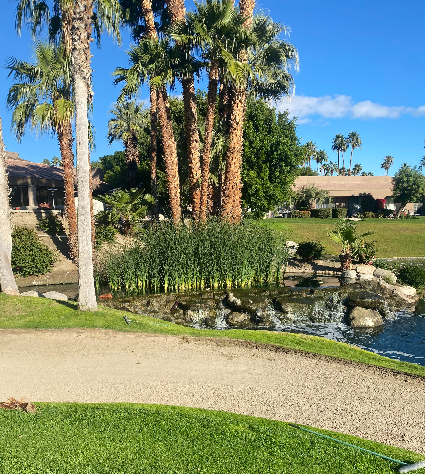
At its core, a bog is a shallow, plant-packed filtration zone built with gravel, controlled flow, oxygenated root systems and intentional plant selection. Water is forced through dense gravel and root matrices where beneficial bacteria thrive. These bacteria break down dissolved nutrients and organic waste before they can accumulate as sludge or fuel algae.
This is why bogs outperform reactive treatments. They do not fight symptoms. They remove causes.
Bogs Starve Algae at the Source
Algae blooms are not a mystery. They are a nutrient problem — specifically nitrogen and phosphorus overload.
Inside a functioning bog, beneficial aerobic bacteria rapidly increase in population. Ammonia is converted and processed, dissolved nutrients are intercepted before they reach open water, and algae lose their food source. When the biological engine is healthy, algae simply cannot compete. The lake stays balanced without constant intervention.
Bogs also improve water clarity continuously. As water moves through the gravel bed, suspended solids are trapped, fine particles are digested, and water exits visibly cleaner — without flocculants or chemical shortcuts. This is why the cleanest lakes and high-end water features rely on bogs as their backbone. The effect is constant, natural and cumulative.
Muck is not inevitable. It is the result of anaerobic failure.
Bogs dramatically increase aerobic bacterial activity, accelerating the decomposition of organic matter that would otherwise settle and rot. Over time, this reduces bottom sludge, odors, dredging frequency and shoreline decay. Bog plants also stabilize shorelines, limit erosion and convert nutrient-laden runoff into filtered water instead of sediment.
But here is the hard truth most people avoid: A bog is only as effective as the people maintaining it.
Landscapers Should Never Touch a Bog
Most landscapers do not understand bogs. To them, a bog looks like a decorative planting bed. They do not understand the pumps beneath the gravel, the plumbing layout, flow rates, oxygen requirements or the biological layers that make the system function.
When they step inside, pull plants or “clean it up,” they often destroy the filtration system without realizing it. Pumps are damaged. Plumbing cracks. Root systems — the heart of the filter — are torn out. A thriving biological engine becomes a dead pit that no longer filters anything.
A bog must be treated like specialized equipment, not landscaping. Respect it, or expect failure.
The Role of Cattails: Powerful Tool or Silent Saboteur
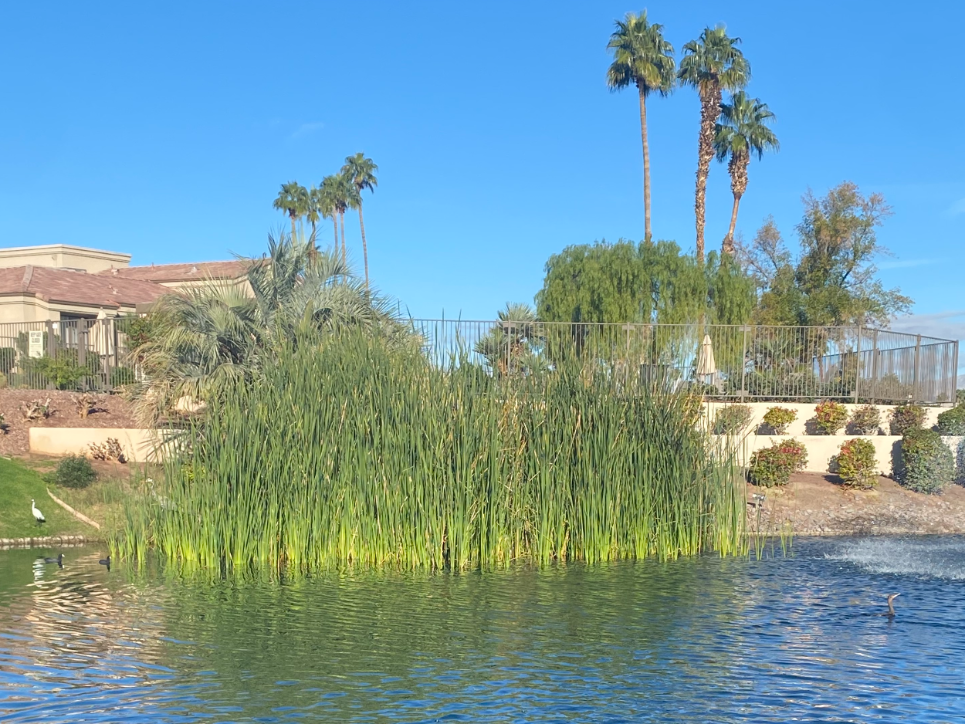
Cattails are not neutral plants. They are either one of the most powerful nutrient-removal tools available or a long-term liability that feeds algae and Lyngbya. There is no middle ground.
Healthy cattails aggressively extract nitrogen, phosphorus, organic carbon and fine suspended solids — the exact nutrients that drive algae blooms and cyanobacteria dominance. But cattails only remove nutrients if the biomass is physically removed while the plant is alive.
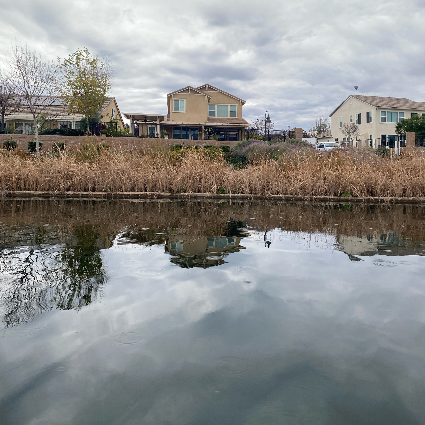
During active growth in spring and summer, nutrients are locked into leaves, stalks and roots. Removing the plant during this phase exports nitrogen and phosphorus off-site and lowers the lake’s nutrient load year over year. If cattails are left to die, cell walls rupture, nutrients leach back into the water and sediment, and an entire season of nutrient capture is undone. Next year’s algae bloom is effectively pre-fertilized.
If someone says, “We’ll cut them back in the fall,” they do not understand lake ecology. Period.
Never Cut cattails — Ever
Cutting cattails does not control them. It multiplies them.
Cattails spread primarily through rhizomes. When the tops are cut, apical dominance is removed and energy is redirected into lateral rhizome expansion. One plant becomes multiple plants within a single season. If the rootball remains, the infestation worsens — guaranteed.
The non-negotiable rule: rootball removal every two years
Cattail management is not trimming. It is scheduled extraction.
The correct interval is every two years, and the entire rootball must be removed. Over time, cattail rootballs become dense nutrient reservoirs, anaerobic zones, phosphorus banks and organic carbon factories. By year three, they stop exporting nutrients and begin leaking them.
Miss this window and the system flips — from nutrient control to nutrient release. That is not maintenance. That is failure.
Why Rootballs Feed Lyngbya
As root masses mature, oxygen levels drop within the rhizome matrix. Iron-bound phosphorus is released, organic carbon increases, and Lyngbya colonizes sediments and root surfaces. If Lyngbya appears near cattails, it is not coincidence. It is cause and effect.
Cut cattails. Leave rootballs. Rootballs decay. Nutrients feed Lyngbya. Lyngbya stabilizes. What was once manageable becomes chronic.
Why Cattails Belong in Bogs — Not Unmanaged Shorelines
Inside a properly designed bog, flow is controlled, roots remain oxygenated, bacteria fully process nitrogen, and cattails act as nutrient pumps rather than nutrient traps. Outside bogs, sediments accumulate, roots go anaerobic, and plants create muck instead of preventing it.
Cattails are either an asset or a liability, depending entirely on management.
The Only Correct Method
Cattails must be removed every two years. Entire rootballs and rhizomes must be extracted. Removal must occur while plants are healthy and actively growing, and all biomass must be physically exported off-site.
Never cut or mulch. Do not leave roots. Never allow landscapers to “maintain” bog plants.
Anything else is cosmetic work that feeds the exact organisms you are trying to control.
The Uncomfortable Truth
Bogs do not fail. Plants do not fail. People fail to manage them correctly.
Cattails do not clean water by existing. They clean water only when paired with intentional harvesting. Most lakes fail because plants are left to rot, root systems are ignored, nutrients are recycled instead of removed, and bogs are treated as decoration.
Do it right, and bogs become the strongest ally your lake will ever have. Do it wrong — or let the wrong hands touch them — and they become a quiet, expensive liability that feeds algae, Lyngbya and muck from the bottom up.
About the Author
Patrick Simmsgeiger is the founder and president of Diversified Waterscapes, a leading lake management and aquatic-treatment manufacturing firm. Licensed by the Department of Agriculture as an aquatic pesticide applicator, he is also a certified lake manager as recognized by the U.S. Environmental Protection Agency and the North American Lake Management Society, and a licensed landscaping contractor.