
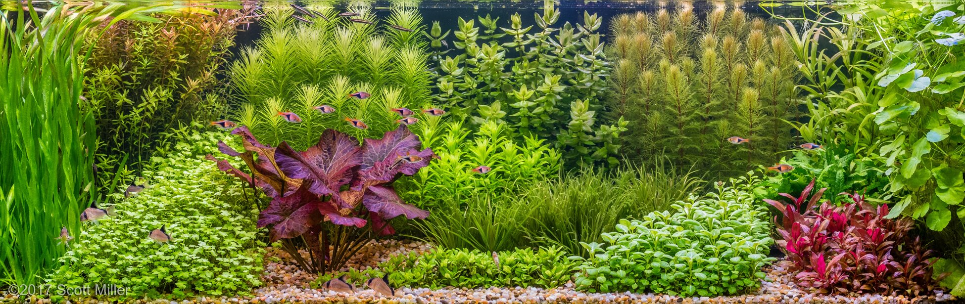
What if I told you the satisfaction of designing a functional pond, placing rockwork, pruning plants and feeding your fish need not diminish with the inevitable change of seasons? What if I also told you there is a hobby so comparable in core principles to ponds and water gardens that the similarities are uncanny, with the main difference being the size and dimension of your project? If that piqued your interest, then aquascaping an aquarium may be a perfect fit for your next winter project.

The aquarium hobby boasts a long history, similar to water gardening, which can be traced back to the Victorian era of the 1800s and beyond. After decades of advancement in livestock husbandry, availability, product development and aquarium-keeping communities and culture, today’s aquariums are more accessible than ever. With these advancements, it’s no surprise that the public perception of an everyday aquarium being “just” a glass box with fish, a few plants, colored gravel and maybe a decorative mermaid or “Diver Dan” ornament is evolving into various styles of aquariums focused on one or more aesthetic or functional goals inspired by nature.
The Artistry of Aquascaping

In simplest terms, aquascaping is the art and practice of intentional aquarium design. Aquascapers use any combination of rock, wood, aquatic plants or other natural elements, such as dried botanicals, to create lush aquatic garden landscapes or biotopes that mimic specific real-life aquatic habitats down to the finest detail.
Artistic principles such as depth, contrast, proportion, balance, scale, form and texture all come into play when creating an aesthetically pleasing aquascape. For example, you might place large stones up front, then slightly smaller stones descending in size toward the back of the aquarium to create a sense of depth and scale. Sloping substrate higher in the back helps force perspective and avoid a flat look.

Picking two plant species of contrasting colors or leaf shapes can create visual interest. Using the rule of thirds can help balance a layout and prevent too many focal points that distract from the details. Think of these more as tools than rules, and remember: rules are made to be broken. Let your creativity flow, play and experiment as you scape.
Over the years, many aquascaping styles have developed. Dutch-style aquascapes, one of the first dating back to the early 1900s, are defined and judged by rules of plant arrangement, species selection, color contrast, husbandry and manicured maintenance. Hardscape elements take a back seat as organization and vivid plant growth dominate.
In contrast, the Nature Aquarium style, pioneered by the late Takashi Amano and is based on creating naturalistic landscapes underwater. Inspiration might come from a panoramic mountain range or a forest clearing with fallen tree trunks covered in moss. These aquascapes mimic not just the visual likeness but also the feeling and story behind the source of inspiration—all within a glass box.
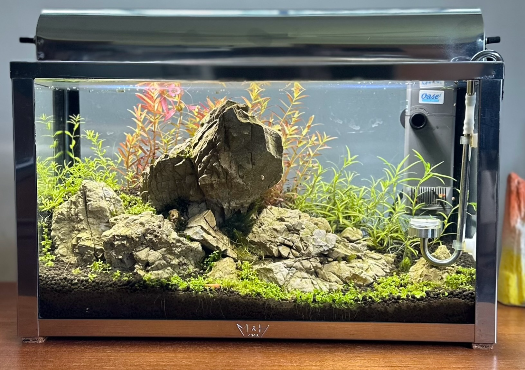
Biotope aquariums prioritize accuracy when depicting a specific habitat. This might include recreating a section of Brazil’s Pantanal wetlands with native plants and fish, or mimicking the blackwater habitat of the neon tetra with thin driftwood, dense leaf litter and tannin-stained water.
For a more literal crossover from ponds to aquariums, you might try a pond-style aquascape. This uses shallow aquarium dimensions to display emersed plant growth and protruding hardscape, much like a backyard pond rising above its basin.
Other styles include Jungle, Diorama, Iwagumi, Brazilian and more. While these styles and principles provide guidelines, don’t get lost in labels. Experiment freely—mistakes and persistence are the recipe for growth. With time, you’ll learn to merge design concepts with your personal taste to create unique aquascapes of your own.
Hardscape: Rocks and Wood
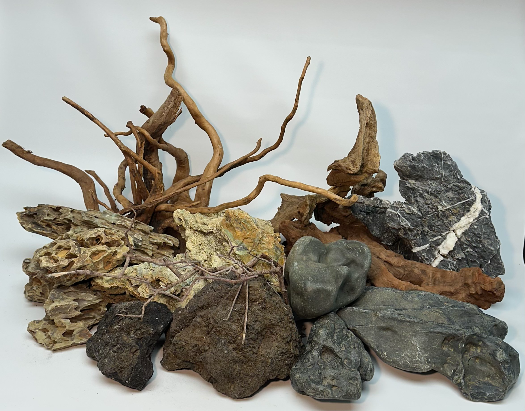
One of the most obvious parallels to ponds is the use of hardscape materials like stone and driftwood. Aquarium stores stock a wide range of rock, including dragon (Ohko) stone, Seiryu stone, lava rock, Hakkai stone, river stone, petrified wood and elephant stone.
Each type has unique geology and aesthetic qualities. Just as with pond rockwork, choose aquascaping stones for color, contrast, texture and character to harmonize with the overall layout.
Different types of driftwood are also widely used—either as the sole hardscape material or in combination with stone. Shaping or breaking hardscape into smaller detail pieces may be necessary to create scale or achieve desired forms.
Tools such as chisels, saws, rasps or Dremels can alter stone and wood. Cyanoacrylate glue and curing methods can seamlessly bond materials. (Wear gloves and work safely—cyanoacrylate is messy and no fun to peel off your hands later!)
Biology and Equipment

Just as koi waste, uneaten food and solids in ponds generate nutrients like ammonia, aquariums face the same challenges. With most aquariums holding less than 100 gallons, waste accumulates quickly, and robust filtration is essential.
Aquarium filters—whether hang-on-back, internal, sump or canister—combine mechanical, chemical and biological filtration. Canister filters, the aquarium counterpart of pond pressure filters, are popular for their large media capacity and out-of-sight installation. Oase, known for pond innovations, also offers aquarium filtration. For example, the BioMaster2 canister filter uses a prefilter to trap debris before it reaches the biomedia, keeping nitrifying bacteria efficient and simplifying cleaning.
Beyond filtration, aquascaping depends on stable conditions for plants. Regular water changes help reset water chemistry and prevent nutrient overload. High-intensity LED lighting has become standard, many models offering controllable intensity.
Carbon dioxide (CO2) injection boosts plant growth by increasing dissolved CO2 during light periods. Nutrient-rich substrates like aquasoil, along with liquid fertilizers, provide balanced plant nutrition. Rimless, low-iron glass tanks now dominate the aquascaping scene, allowing the focus to remain on the scape itself.
Plants, Fish and Community

Take a close look at aquatic plants sold at pond supply stores and you’ll notice overlap with aquarium plants. In fact, some are the exact same species—such as Bacopa caroliniana. Many genera cross over between ponds and aquaria, including Ludwigia, Rotala, Sagittaria, Lobelia, Nymphaea and more. This overlap offers endless opportunities for experimentation and collecting.
Indoor aquariums also allow for a wider variety of fish than most outdoor ponds, especially in colder climates. Small schooling fish such as tetras and rasboras pair well with aquascapes, providing color, motion and scale without overwhelming the layout. Bright Ember Tetras (Hyphessobrycon amandae), for example, stand out beautifully against a green-planted background.
Beyond the plants and fish, perhaps the greatest parallel between ponds and aquariums is the people. Both hobbies thrive on community. Local aquarium clubs, meetings and events provide inspiration, knowledge and camaraderie.
Parting Thoughts
Between these parallels, it’s no surprise many pond enthusiasts eventually discover a passion for aquascaping. This intersection allows you to apply skills you already have to a new, exciting medium—one that blends science, art and community.
Maybe this is your sign to take the plunge and enjoy nature up close this winter through the therapeutic practice of aquascaping.

I would love to see more finished examples. Where might I go to find these?