
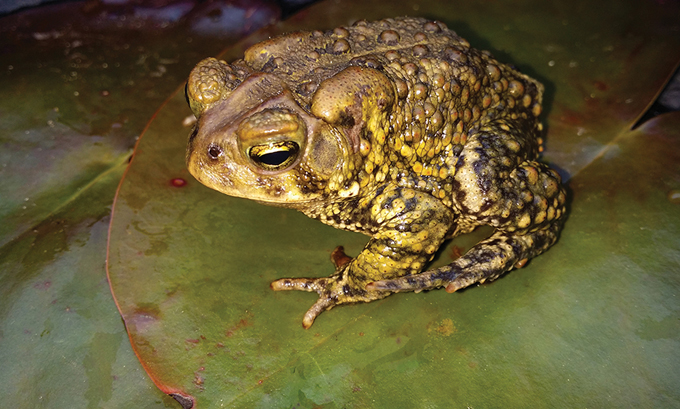
When visiting a famous Hosta garden in central Iowa many years ago, I noticed that there was very little slug damage to the Hostas. I asked the owner, the late Russ O’Hara, how he controlled the slugs. Did he use the usual remedies, like copper rings, ammonia spray, saucers of beer? Or just what? He said he used none of those. What he did was ingenious: he paid neighborhood kids “a buck a toad” for each toad they brought him, which he then released into his garden. In a typical year he would get maybe 30 toads. Yes, I said toads!
And it worked! That was the only method he used, and it got rid of the majority of the slugs. Of course, these days, kids would charge a lot more to catch those toads. However, an even better strategy is to install a water garden and the toads will show up on their own.
Toads versus Frogs
The toad I am talking about is the American Toad (Anaxyrus americanus) and its range is mostly eastern North America and eastern Canada. There are many other closely related species of toad that have similar predation habits of eating small critters, including slugs. The toad will eat anything that is alive and can fit in its mouth. Of course, the toad has to be able to catch it as well, so small invertebrates are its main diet.
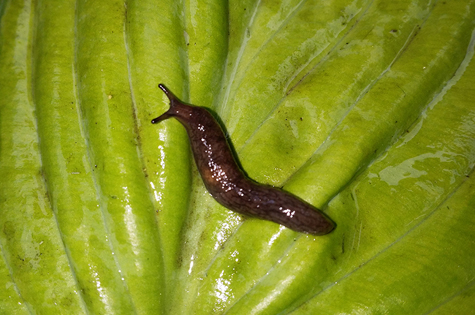
What a great natural predator!
Toads are more of a terrestrial amphibian, unlike most frogs, which have to be near an area that is very damp to keep their skin moist. Toads do not have this requirement. Their skin can become somewhat drier, so they can be found in all parts of a landscape — not necessarily near water. The adult toads will be found in heavily mulched areas or vegetation. However, in order for toads to reproduce they must have water in which to lay their eggs, and the resulting tadpoles (I call them “toadpoles”) must have water in order to grow and find food. Toads lay their eggs in long, gelatinous strings that are usually wrapped around an underwater plant or something similar. Frog eggs, in comparison, are laid in one big, gelatinous mass. The toadpoles graze on the patina or biofilm of a pond.
They are eating surface algae and the critters (bacteria and invertebrates) that are found in the patina.
A Distinctive Voice
Most people, when they hear the song of the male toad, think it is being made by frogs. It is one of the first songs made by amphibians in in the spring. It is a beautiful time of the year, so that is what I think of when I hear the song. On a rainy night there can be so many toads hopping across the landscape to get to the water garden that the grass is alive with toads on a mission.

Fish do not normally eat toadpoles — at least from what I’ve observed. The toadpoles and the adult toads have a toxin in their skin called bufotoxin that, while extremely mild compared to other poisonous amphibians, can supposedly irritate some people’s skin. This toxin does somewhat protect the toad and toadpoles from being preyed upon by some predators. I’ve seen animals attempt to eat toads and then spit them back out.
Growing Up Green
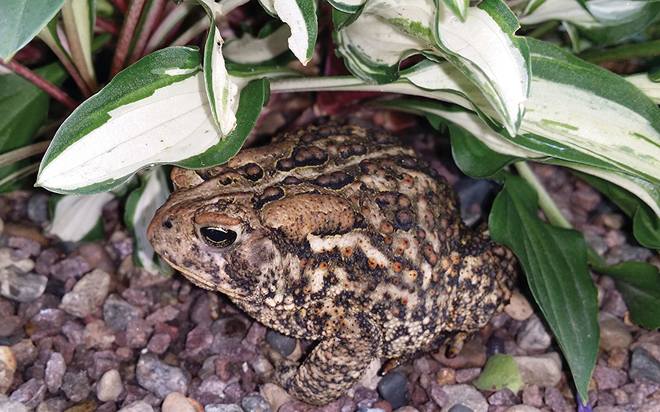 The toadpoles will metamorphose into baby toads in one to two months, depending on food and water temperatures. They then abandon the water, only to return to reproduce in the next year or two. I have read that they can live and come back to your water garden for 20 to 30 years. Now that’s a long time! In the interim they are in the landscape, eating all kinds of pesky critters like slugs. You will find them under mulch, heavy vegetation or just loose dirt.
What a great natural predator in the landscape…a valuable ally in natural pest control. One that will show up on its own to reproduce in a water garden, if there is one. Most predators around a water garden are focused on eating the fish and are, of course, not wanted. Not this one! We finally can welcome a predator that only eats small, pesky critters like slugs. As a bonus, the toad’s song is a harbinger of spring — one that I always look forward to.

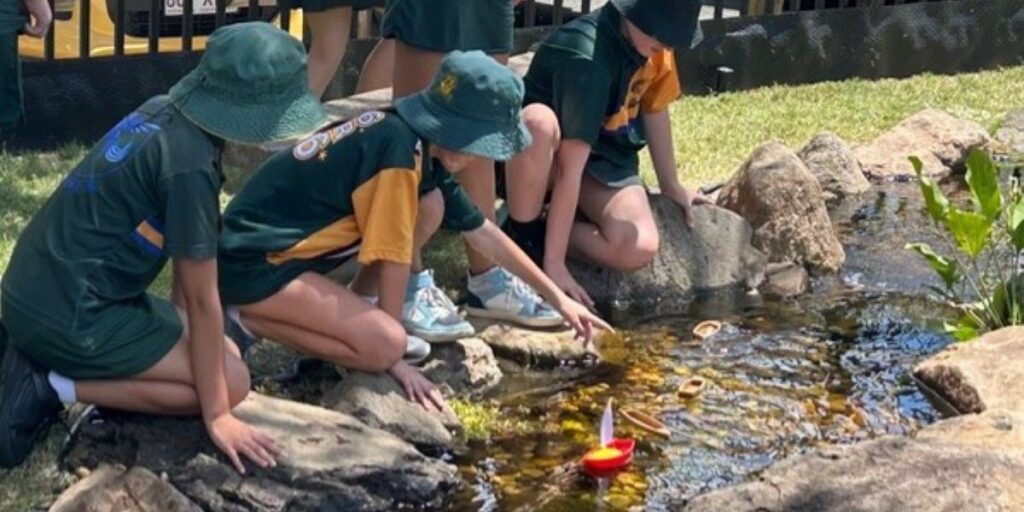
After many years, I finally have a toad in my small water feature! (It would be presumptuous to call it a pond). The problem is that it arrived in the spring just as I was removing the pavers around it which had come loose so it needed leveling. I promptly stopped the work but I think I’d better fix it before winter. Can I do so without chasing away the toad?
Hi Alexa
I am impressed by your concern for these natural predators that most people regard as ugly. They use the pond in the spring to breed but after they mate they leave and inhabit your entire landscape. Even the toadpoles (tadpoles) metamorphize into baby toads, of course, but they also go out into the landscape. So when landscaping around the pond just be careful when you come across a toad — relocate it to another part of the landscape. They like mulch, loose soil and taller grass to inhabit. Under your plants where the bugs are is another great location for relocating them. Thanks Jamie