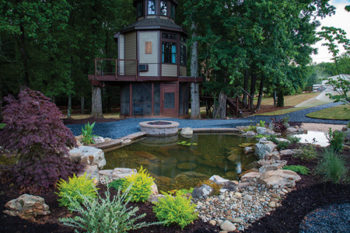

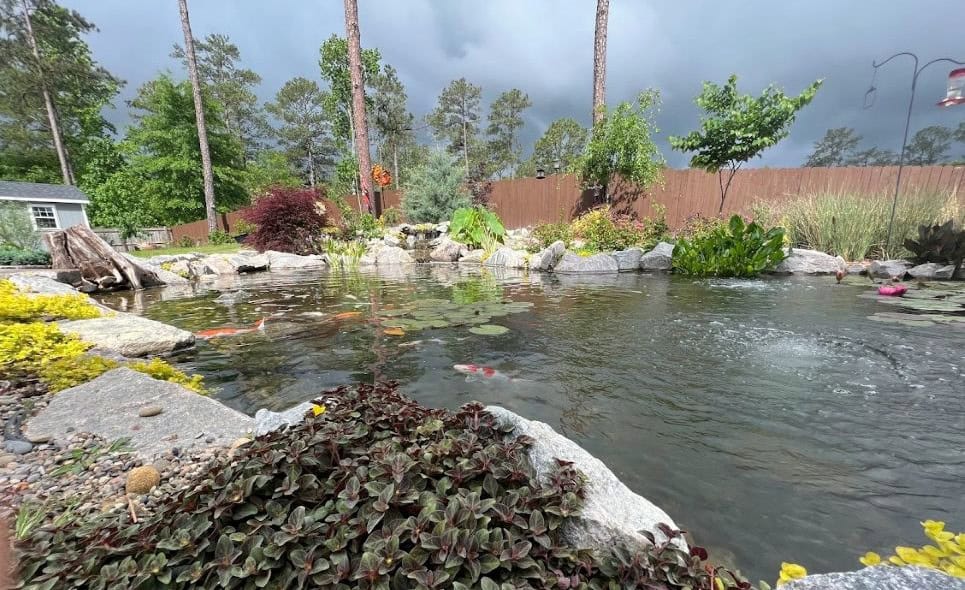
In April 2026 my son and I built a 16-by-20-foot backyard pond in West End, North Carolina. It holds about 5,000 gallons. The deepest point is 28 inches. We finished the pond in four days. Landscaping took about one more day.
I run Carolina Water Gardens out of Aberdeen, North Carolina. Most of the yards I work in are Sandhills soil — soft and sandy on top, clay underneath. This job was the same. I’m writing this for other builders who dig the same dirt and want to hear what we actually did on the job.
Design and layout
Understanding what the customer is looking for, and where the waterfall placement is vs. the viewing angle, is so important. Ponds are viewed all year long, not just during the warmer months. Spend time in the design process. Make sure you and the customer are aligned on the vision before you put the first shovel in the ground. We marked the shape with pink paint before anything came out of the ground. Outline, plant shelves, skimmer pocket, stream line. The homeowner walked it with us. If something felt wrong, we moved the paint. Once it looked right, we stuck to it. Paint is cheap. Digging twice is not.
Digging
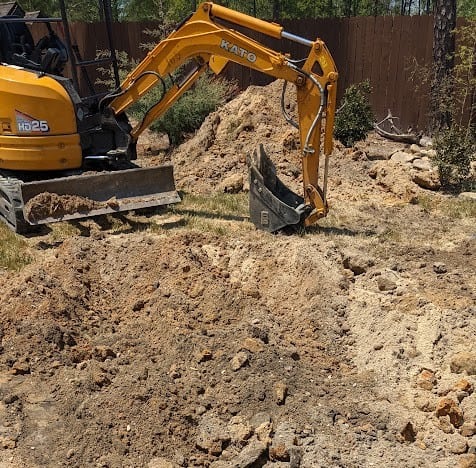
The top spit came easy. Then we hit clay. Clay holds a shelf, which is good for plant benches. It also holds water in the hole overnight, so we kept a pump ready. We cleaned the shelf faces before underlayment went down, no sharp roots, no rock tips left sticking up.
On a 28-inch deep hole that matters. One sharp tip left under the liner is a callback later. We dug the skimmer bay and the BioFalls pad as we went. I always set the skimmer and BioFalls early. They go in with the liner. We dig the trench for the 2-inch flex PVC at the same time. If you wait until the stone is in, you’re fighting yourself.
Liner
Underlayment was Aquascape underlayment. Liner was Aquascape 45-mil EPDM. It was a windy day. We had weight and hands ready before the sheet came off the roll. Laid the underlayment first, then the liner. Worked it into the shelves and corners. Sealed it into the Signature Series 1000 skimmer and the BioFalls 6000 while we could still reach the boxes.
Filtration and plumbing
Filtration on this pond is an Aquascape Signature Series 1000 skimmer and an Aquascape BioFalls 6000. The skimmer sits at the collection end. The BioFalls sits at the head of the stream, buried in rock. Surface water is pulled into the skimmer through an AquaSurge adjustable-flow pump then through 2-inch black flex PVC to the bottom of the BioFalls where it hits the swirl chamber and gives time for the sediment to settle. It runs through filter pads and bio balls filtering out water impurities. Over the top of the BioFalls down the stream oxygenating the water and back into the pond. We also ran Dual Union Check Valve 2.0 fittings, an IonGen System G2, two Aquascape automatic dosing systems, a pond powerhead, and LED lighting with splitters. The check valves keep the stream from draining back overnight. The AquaSurge lets you dial the falls without redoing the plumbing. The two dosers handle treatment on a schedule. The IonGen helps while the filter matures. I put the gear list on the proposal in writing. That way nobody is guessing mid-job what was supposed to be included.
Rock
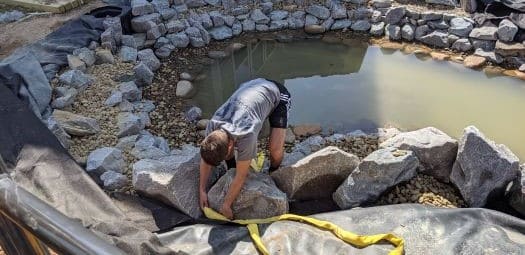
We used 20 tons of granite rock and boulders on this job. Shelf rock first to lock the liner and build the curve. Then the bigger edge boulders. My son ran the strap while the machine took the weight. We set each boulder on rock or compacted shelves with underlayment on top to protect the liner. If it can slide, it will. Making sure the boulders are locked in place is important. Gravel went on after the structure was right. Cover the liner. Leave the shelves ready to plant. Don’t make the edge look like a wall. Twenty tons goes fast once you start dressing shelves, the stream, and the edge.
Stream, fill, fish, lights
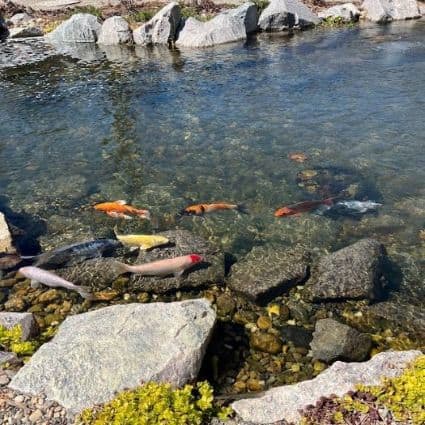
The stream is a few short drops, not one tall splash. Sounds better from the house. Gives you more spots for lights. The BioFalls feeds that run, so the filter and the falls are the same pile of rock. We filled late in the day. Turned the submerged LEDs on while the water was still coming up so we could see dark spots and fix them before we packed up. Koi went in once circulation was running.
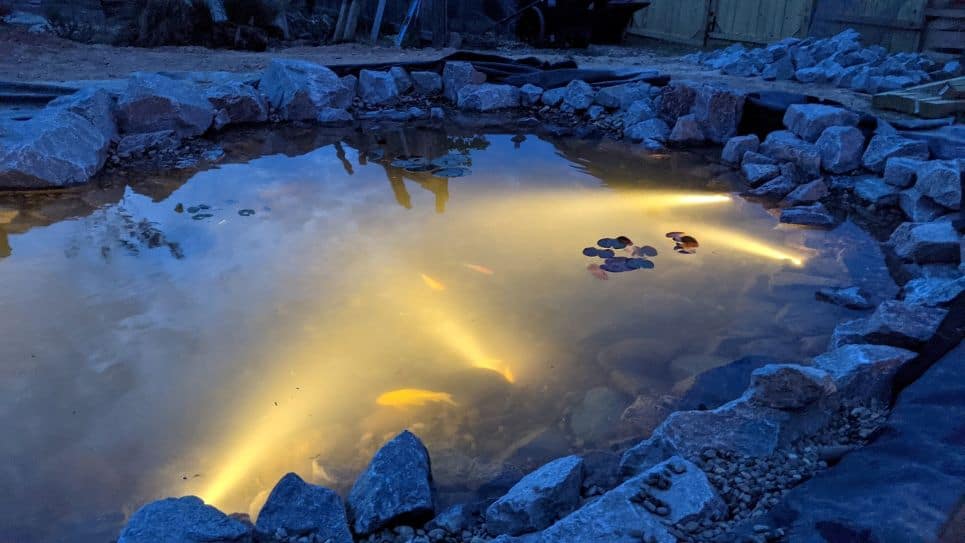
At night the lights show you whether the rockwork reads. We put low-voltage lights in the water and along the stream. That’s what the homeowner walks out to look at after dark.
Plants and landscaping
In the water we used canna lily and water lily. Around the edges we love using creeping jenny. It softens the rock fast and trails into the water clean. We plant this inside the liner and even in the direct NC sun it thrives with wet feet. On the landscaping day we planted blue junipers and Japanese maples around the pond. That fifth day is what makes the yard look finished. Without it, you’ve got a good pond sitting in a dirt pad. The junipers and maples give the edge some height and color so the rock doesn’t look bare.
What worked
Spend time on design first — waterfall placement vs. the viewing angle, and make sure you and the customer are aligned before the first shovel. Pink paint next. Dig for clay and plan on it. Set the skimmer and BioFalls with the liner, and dig the 2-inch flex trench then. Hold the liner when it’s windy. Put 20 tons of stone where it belongs, with a strap and a machine. Run the BioFalls into short stream drops. Light it before you call it done. Spend the extra day on canna, water lily, creeping jenny, blue junipers and Japanese maples so the homeowner sees a yard. Two of us. Four days on the pond. About one day of landscaping. West End, April 2026. About 5,000 gallons. That’s the build.
About the Author
Jon DeOliveira is the owner of Carolina Water Gardens in Aberdeen, North Carolina. The company builds ecosystem koi and goldfish ponds, water gardens, waterfalls and streams in Pinehurst, Southern Pines, Aberdeen and the rest of Moore County. He is n site for every build from start to finish.