
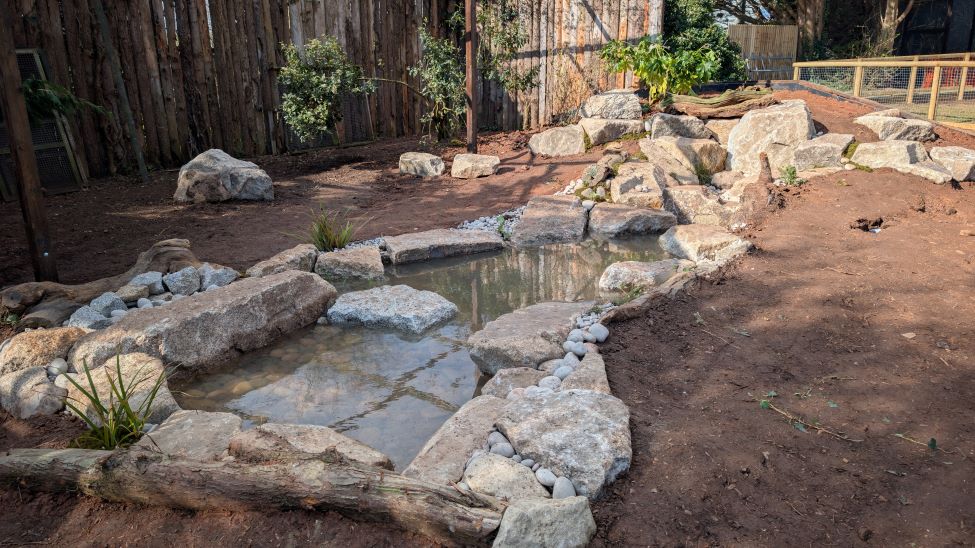
When I first heard about Bode, a rescued bobcat who had found a safe haven at Tropiquaria Zoo in Somerset, I knew this wasn’t going to be just another pond project. A zoo habitat was something much bigger. Bode had been saved at the very last moment from being put down, and although Tropiquaria was able to give him a home, they wanted more than just an enclosure. They wanted to give him an environment that truly felt like nature.
For me, that’s where it gets exciting. With my Master’s degree as an Aquatic Ecologist, I’ve always been fascinated by how we can design water features that don’t just look good, but function like natural systems. At DU Waterscapes, that’s exactly what we specialise in—ecosystem ponds that look after themselves.
More Than Just a Pond
I’ve always believed that if animals are kept in captivity, we owe it to them to make those spaces as natural as possible. Zoos often struggle with water features in enclosures, requiring regular cleaning, sometimes emptying and refilling two to three times per week. That’s time taken away from what keepers do best—caring for and enriching the lives of their animals.
Our approach flips that on its head. By using biological filtration, we create a water body that keeps itself balanced. For Bode, that means fresh, flowing water to drink from, explore, and perch beside. For his keepers, it means a dramatically reduced maintenance routine, freeing up precious hours for training, enrichment, and education.
Rallying the Team

Time was short—we had just two weeks to bring together a team, gather materials, and deliver something that had never been attempted in a European zoo before: an ecosystem pond built for a wild animal.
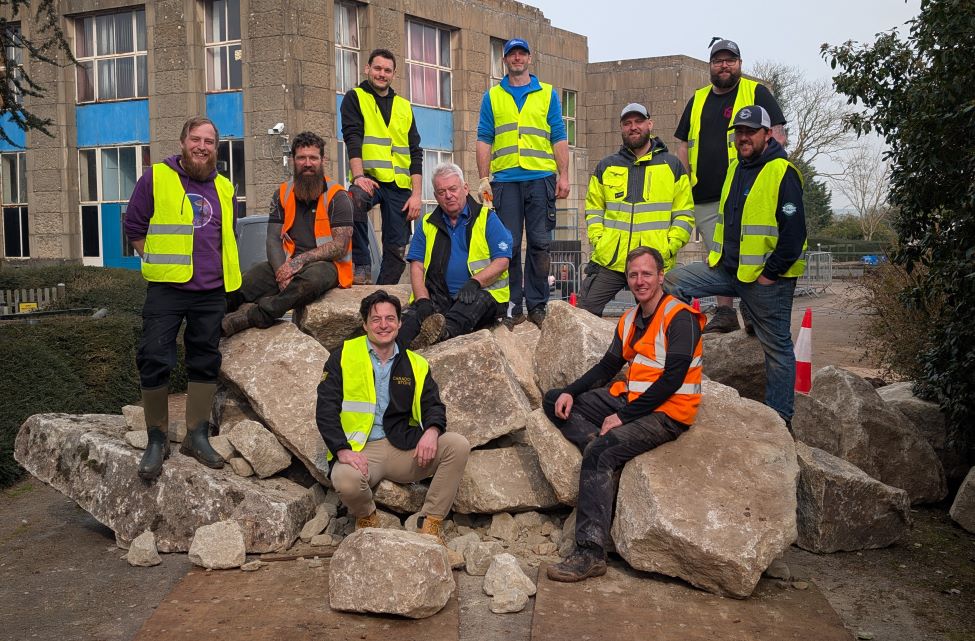
Big projects need big teams, and this one was no exception. Luckily, we’re part of the Aquascape network—a global family of pond builders who love nothing more than rolling up their sleeves for a challenge.
Within days we had an all-star crew ready to go: Jon from JD Landscapes up in Yorkshire, Tom from Aquaflora in Gloucestershire, Ian from SI Landscaping in Bedfordshire, Urban from AquaLife over in Slovenia, our own Tom from DU Waterscapes, Chris from Landscape Plus, Toby from Aquascape, and Fish Shop Matt.
It was a fantastic mix of skills and personalities, and it was brilliant to see everyone give up their time and energy to make this happen.
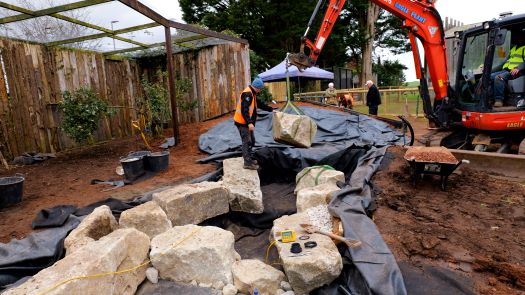
Of course, no project of this scale happens without support. We were bowled over by the generosity of our sponsors—Aquascape Inc., Landscape Plus UK, Caradon Stone, Stone Warehouse, Concrete Canvas Ltd., Eagle Plant Hire, and Aqua Eden.
They provided everything from stone and liner to machinery and logistics, without which this build simply wouldn’t have been possible.
Designing for Bode

This style of ecosystem pond has been thriving in zoos and rescue centres throughout America. Only the year before, we had been over in Florida building similar systems at Busch Wildlife Sanctuary for Floridan black bears and a pair of cheeky otters.
The principles are exactly the same as for a garden: using the natural power of beneficial bacteria to clean the water without harsh chemicals and creating a low-maintenance system that’s easy for staff to enjoy.
From Bode’s perspective, it’s enrichment. Flowing water, varied edges, shaded spots, places to perch or drink—it all makes his world more interesting. From the keepers’ point of view, it’s easier to maintain and blends seamlessly into the rest of his habitat.
The atmosphere on site was brilliant. When you’ve got a group of pond builders together, there’s always plenty of laughter. We loved working with the Tropiquaria team, designing with them to create the most efficient maintenance schedule that fits with their daily routines.
The Big Reveal
After several intense weeks, the enclosure was complete and ready for its most important critic—Bode himself. The zoo decided to let him settle into the enclosure quietly before the public opening, and I’ll never forget the first time we saw him exploring his new home.

He padded around cautiously at first, but soon enough he was drinking from the pond edge, perching on the rocks, and exploring the flowing stream. It was exactly what we’d hoped for—natural behaviour in a natural setting.
By Easter, Tropiquaria opened the enclosure to visitors. The response was overwhelming. Visitors loved seeing Bode in such a natural-looking environment, and the zoo staff were thrilled with how the system worked behind the scenes, allowing them to focus on what really matters: Bode’s welfare.
A New Standard for Zoos
For us, this project wasn’t just about building a pond. It was about demonstrating a new way forward for zoos and sanctuaries. Ecosystem design means healthier animals, lower running costs, less maintenance, and happier keepers.
Bode’s pond is the first of its kind in Europe, but with discussions underway for further installations around the UK, it won’t be the last. For me personally, it was a reminder of why I fell in love with this work in the first place. Building ponds isn’t just about water and stone; it’s about creating life—whether that’s in a garden, a park, or in this case, a zoo.
With the new legislation for 2027 leaning heavily towards goal orientated enrichment, requiring not only well designed enclosures but also an active log of staff developed enrichment programs, we see these naturalistic and dynamic environments a key way to reach these new legislative targets.
I hope this project inspires other zoos and wildlife parks to rethink their approach. If we can build environments that are alive—ecosystems in their own right—then we’re not just housing animals, we’re giving them a slice of the wild they deserve.
This build has shown what happens when science, craftsmanship, and passion for animal welfare come together. We’re proud that Bode is thriving in his new home, and we hope his story inspires others to embrace ecosystem-based design in the years ahead.