
Black Koi Water Features tackles groundwater, massive stonework and natural filtration in an expansive North Carolina recreation pond
When we began work on this recreation pond in Fletcher, North Carolina, we knew from the start that it would be anything but a typical build.
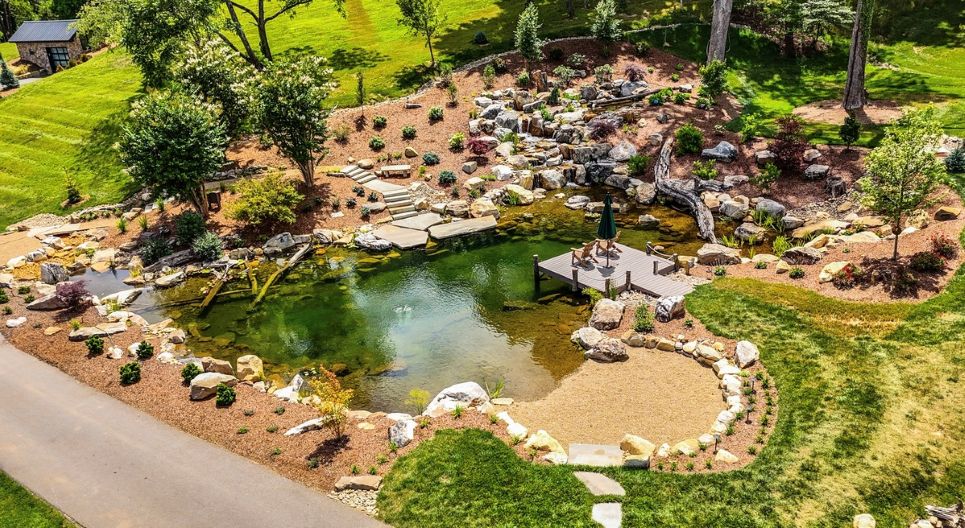
At roughly 100 feet long and 60 to 80 feet wide, the pond was designed to function as much more than a water feature. It incorporates an intake bay skimming system, an Aquascape upflow bog filtration system, a dock, dedicated fishing areas stocked with bass, a beach entry, aeration, massive stone slabs for sunbathing, stairs, benches, statuary, aquatic plantings and full nighttime lighting.
The scale alone puts this project in a category of its own.
“This really sets a precedent for water-feature design and size,” I said during a recent visit to the completed project. “It’s not like a normal recreation pond or a normal ecosystem pond. It’s almost like an actual pond, but it’s all custom, with all the care, attention to detail and beauty that any other artful water feature would have.”
Starting From a Low Spot
Like many challenging projects, this one started with a difficult site.
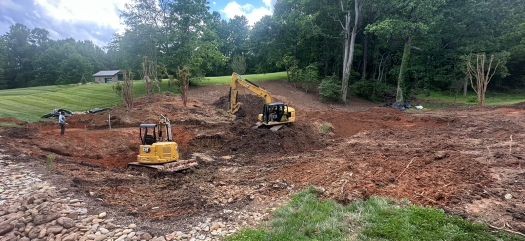
The future pond occupied a low, unfinished area of the property — generally not the first place a contractor would choose to construct a large, lined recreation pond. Low areas tend to collect water and can introduce significant drainage and groundwater challenges.
This site delivered nearly all of them.
During excavation, our crew encountered three separate underground springs, with water bubbling directly out of the ground. Before we could think about liner, stonework or waterfalls, we had to address what was happening underneath the pond.
We installed a comprehensive underdrain system designed to capture and redirect the groundwater. The water had to be routed from beneath the pond, under the nearby road and ultimately to daylight on the opposite side of the property.
That underground infrastructure is largely invisible in the finished project, but it was critical to making the entire build possible.
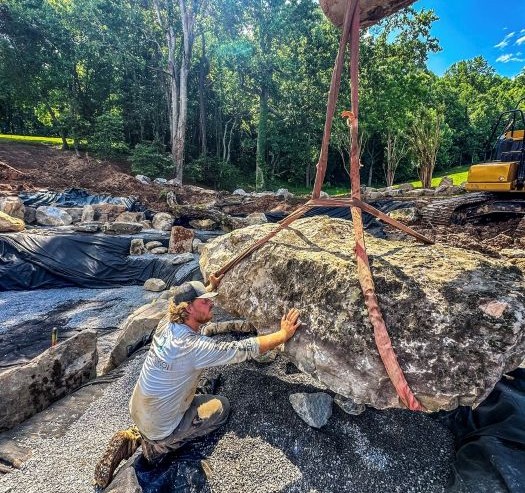
The scale of the stonework presented another logistical challenge. To achieve natural proportions in a pond this large, we needed boulders that wouldn’t be visually overwhelmed by the surrounding water and landscape.
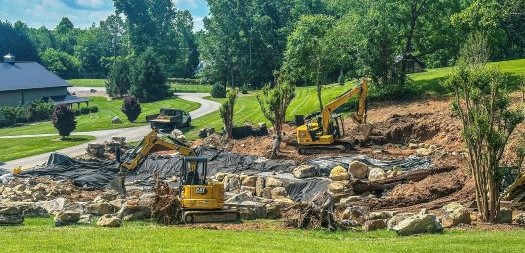
Moving rock of that size required renting a specialized excavator capable of handling loads well beyond those of a typical residential pond installation.
Building Through the Rain
Construction took place during June and July, when Western North Carolina can be both hot and wet.
For several weeks, rain seemed to arrive almost every afternoon. Unfortunately, much of it came during one of the most vulnerable stages of construction — before the liner was installed and before we could begin placing rock.
The combination of repeated rainfall, active groundwater and the extensive underdrain work made this one of the more physically demanding projects our crew has completed.
Large-scale water features require contractors to adapt constantly. A design may begin on paper, but once excavation starts, the site tells you what is actually possible. In this case, managing water before we could build the water feature became one of the most important parts of the job.
Designing a Pond to Be Experienced
From the beginning, this pond was intended to be explored, not simply viewed from the house.
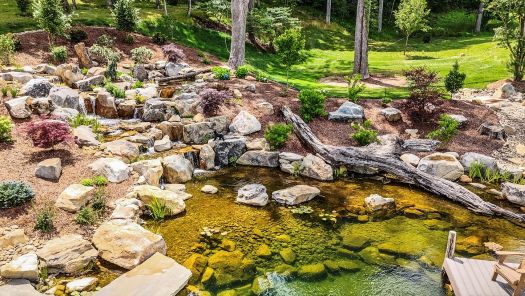
While clearing the site, we discovered a large, decaying oak log in the surrounding woods. The original tree was approximately 24 to 30 inches in diameter. Rather than remove it from the property, we incorporated it directly into the pond.
Partially submerged, the log creates a strong visual element while also adding habitat and biodiversity to the system. It looks as though it has always belonged there, which is exactly the effect we wanted.
At one end of the pond, we also created what we call a remediation zone. This shallow sanctuary provides an area where tadpoles, small fish, aquatic plants and microorganisms can establish away from the pond’s larger fish and predators. The zone also helps capture nutrients and contributes to the biological balance of the overall system.
Another distinctive element is a series of massive stone sunbathing slabs. Some measure roughly 10 feet across and sit immediately adjacent to deeper water. Swimmers can dive directly into the pond and climb back onto stone warmed by the sun.
Features like these transform a recreation pond from something people admire into a space they actively use.
Creating a Waterfall at the Right Scale
The waterfall serves as the visual centerpiece of the project, and I wanted its design to be different from waterfalls we had created on previous Black Koi projects.
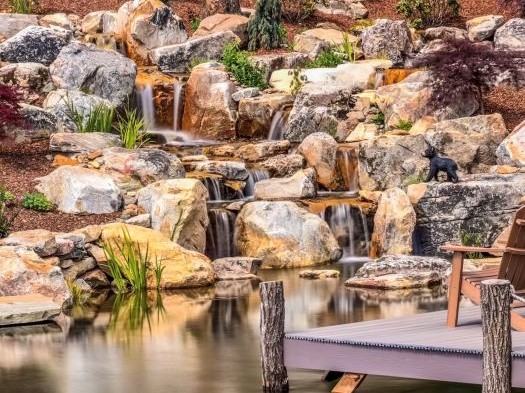
The waterfall begins narrower at the top and gradually widens as it approaches the pond, mimicking the way many natural waterfalls and streams develop.
Scale was especially important.
I often save the largest boulders on a project for the waterfall because they help visually anchor the feature. On this build, the largest boulder frames the second drop. It stands approximately 5 feet tall and weighs an estimated 8,000 to 10,000 pounds. Several other stones used in the waterfall weigh closer to 6,000 pounds each.
With a pond this large, smaller stone can quickly disappear visually. Using substantial boulders allowed us to create a waterfall that feels proportional to the body of water rather than looking like an addition placed beside it.
Filtration on a Larger Scale
A recreation pond of this size requires a filtration system capable of supporting a substantial volume of water while remaining relatively straightforward to maintain.
We designed the system around two major components: an intake bay and an upflow bog filtration system.
The intake bay operates on the same basic principle as a pool skimmer but on a much larger scale. Positioned to draw surface water toward a designated collection area, it directs floating leaves and debris into one location where they can be removed.
We also wanted drainage and overflow components to feel intentional within the landscape. A small bridge and river rock help integrate these functional areas into the overall design so the movement of water through the system does not feel like an afterthought.
From the intake bay, water moves through the upflow bog filtration system. The approximately 6-foot-deep filtration area contains thousands of pounds of layered aggregate. Water is distributed beneath the rock and moves upward through the media.
The aggregate provides extensive surface area for beneficial microorganisms while also helping capture suspended material. Aquatic plants incorporated into the system further assist with nutrient uptake.
Rather than relying solely on mechanical equipment, the goal was to create a system that uses biological processes to support water quality — and to scale those principles appropriately for the size and intended use of the pond.
Adding Fish to a Young Ecosystem
Fishing was another important component of the homeowner’s vision.
A friend of the homeowner, an avid bass fisherman, helped stock the pond. The initial stocking was unsuccessful, with fish losses occurring while the young ecosystem was still developing. Limited available forage and winter conditions may have contributed to those early losses.
Later stocking efforts have been more successful, and the pond now supports an active fishing component.
The experience was also a reminder that completing construction does not mean a pond has finished developing. A newly built ecosystem needs time to mature.
Letting the Pond Grow In
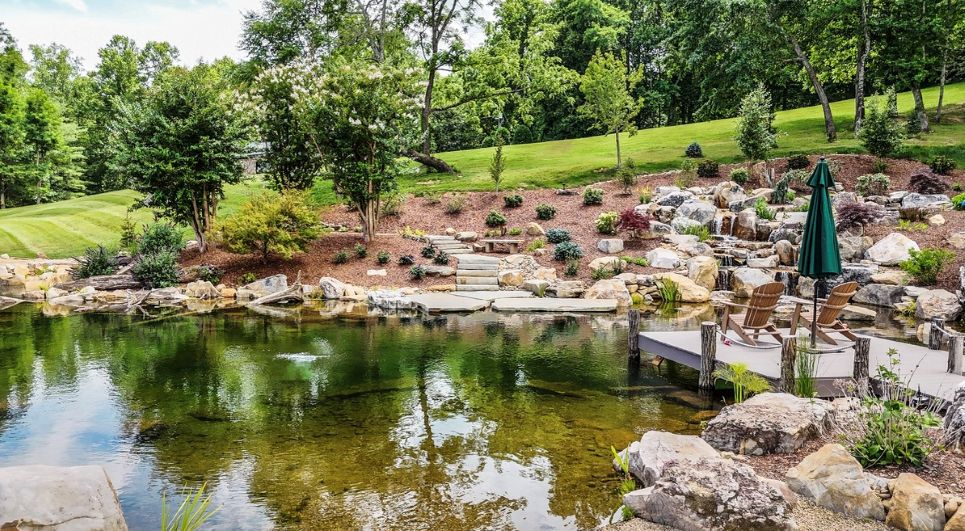
Less than a year after completion, this pond is still establishing itself.
Like many young water features, it has experienced periods of algae growth as biological processes, aquatic plants and nutrient levels begin to find a balance. As the aquatic plantings mature, increased surface coverage from waterlilies and other plants should help shade the water and compete for available nutrients.
The surrounding landscape will change just as dramatically.
Japanese maples and other plantings are still establishing their root systems. Over the next several growing seasons, the landscaping should soften the stonework, fill open areas and make the entire project feel increasingly established within the property.
That is one of my favorite aspects of building naturalistic water features: The day construction ends is not the day the project is finished.
A well-designed pond continues to change.
Bleeding for Beauty
Every project leaves an impression on the crew that builds it, but some stand out because of what it took to get them across the finish line.
This was one of those projects.
Between underground springs, summer rain, massive boulders, specialized equipment and the sheer scale of the feature, our crew had to work through challenges that aren’t part of an average residential pond installation.
At Black Koi, we have a saying: “We bleed for beauty.”
It may sound dramatic, but anyone who has spent long days moving stone, working in mud and solving unexpected problems on a job site understands what it means. Creating something that looks effortless in the finished landscape often requires an enormous amount of effort behind the scenes.
That passion is reflected throughout this project — from infrastructure most visitors will never see to the placement of a reclaimed oak log that they can’t miss.
And despite a pond measuring roughly 100 feet long, there is already talk about making it bigger.
Apparently, it still isn’t quite big enough.
About the Author
Joe Zawistowski is the owner of Black Koi Water Features, a pond construction and maintenance company based in Hendersonville, North Carolina. Black Koi Water Features serves Western North Carolina and Upstate South Carolina, specializing in naturalistic ponds, recreation ponds and custom water features.